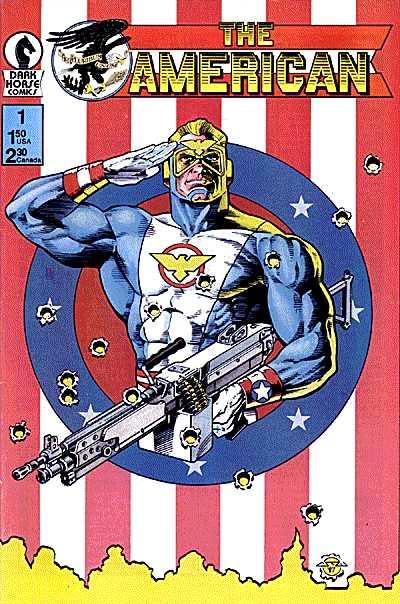
 In 1987, Dark Horse Comics introduced a superhero who appeared to represent everything America stood for. He was strong, patriotic, seemingly indestructible, and dedicated to defending truth, justice, and the American way. His name was simply The American.
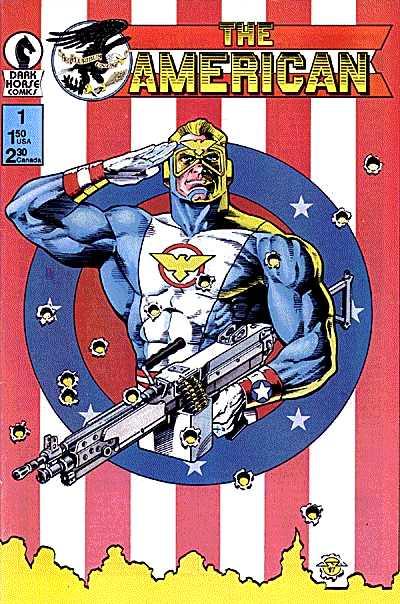
But what happens when the greatest superhero in the country isn’t everything the public believes him to be?
Created and written by Mark Verheiden, The American was a different kind of superhero comic. Rather than celebrating the traditional patriotic hero, the series questioned what such a hero represented, who controlled his public image, and whether the public could trust the institutions standing behind him.
Published during the early years of Dark Horse Comics, The American was part of a growing movement in independent comics that challenged the conventions of mainstream superhero storytelling.
While readers were familiar with patriotic heroes such as Captain America, Verheiden presented a character whose legend was as important to the story as the man behind the costume.
For decades, The American had been a national symbol. Dating back to the 1950s, he had become an almost mythical figure, an apparently indestructible champion who defended the country against its enemies.
His colorful costume, complete with patriotic imagery, suggested the wholesome superhero tradition of the Golden and Silver Ages. He appeared to be a living embodiment of American ideals.
But there was more to his story.
The series follows Dennis Hough, a reporter assigned to investigate The American, a hero he had admired since childhood.
What initially appears to be a straightforward assignment becomes something much more complicated. As Hough investigates the superhero’s history, he discovers inconsistencies, hidden agendas, and disturbing questions about the man the nation has been taught to admire.
The deeper Hough digs, the more he realizes that the mythology surrounding The American may be carefully constructed.
The story gradually transforms from a superhero adventure into a political mystery involving manipulation, public relations, government interests, and the uncomfortable relationship between truth and national mythology.
Rather than simply asking whether The American is a good superhero, Verheiden asks a more troubling question: What happens when an entire country needs to believe in a hero, regardless of the truth?
The timing of The American was significant.
The 1980s were a period of substantial experimentation in superhero comics. Frank Miller’s The Dark Knight Returns and Alan Moore and Dave Gibbons’ Watchmen had demonstrated that superheroes could be used to examine politics, violence, morality, and society itself.
The American explored similar territory but approached the subject from a different direction.
 Instead of presenting a world filled with superheroes, Verheiden focused on the consequences of one enormously influential national figure.
The American was not merely someone who fought criminals. He was a cultural institution, a patriotic celebrity whose very existence influenced how people viewed their country.
Verheiden understood that the public image of a superhero could be as powerful as his abilities.
That idea gave the series a distinctive identity. Readers were not simply following battles between heroes and villains. They were witnessing the gradual dismantling of a carefully maintained national legend.
The story also reflected the anxieties of its era, including public distrust of government, political manipulation, media influence, and the uneasy distinction between patriotism and propaganda.
Yet the comic never completely abandoned traditional superhero adventure. There was still action, danger, and colorful characters. The difference was that the action served a larger mystery.
One of the defining elements of the original series was the artwork of Chris Warner.
Warner’s illustrations captured the recognizable visual language of classic superhero comics while introducing a harder, more grounded atmosphere.
His version of The American looked like a traditional patriotic champion, complete with an impressive physique, distinctive mask, and recognizable insignia. However, the figure could also appear intimidating, particularly when the story moved into its more violent and unsettling moments.
The original series was published in black and white, allowing Warner to make effective use of shadows, textures, and dramatic contrasts.
There was a deliberate tension between the heroic imagery and the darker subject matter. The American could look like a character who had stepped directly out of a classic superhero comic, but the world surrounding him was considerably less innocent.
Beginning with issue #5, Grant Miehm became the principal artist, carrying the story through the conclusion of its original eight-issue run.
The changing artwork did not diminish the central concept. Instead, the different artistic approaches helped establish The American as a series interested in storytelling rather than simply maintaining a familiar superhero appearance.
Although the original comic ran for only eight issues, The American’s story did not end there.
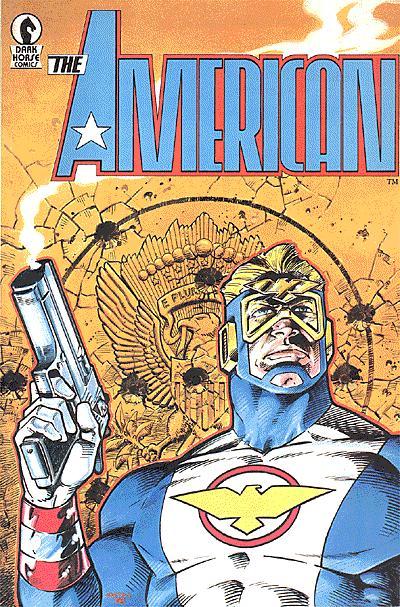 Dark Horse published The American Special in 1990, featuring artwork by Doug Braithwaite and Robert Campanella. The special revisited Dennis Hough and expanded the fictional history surrounding the patriotic hero.
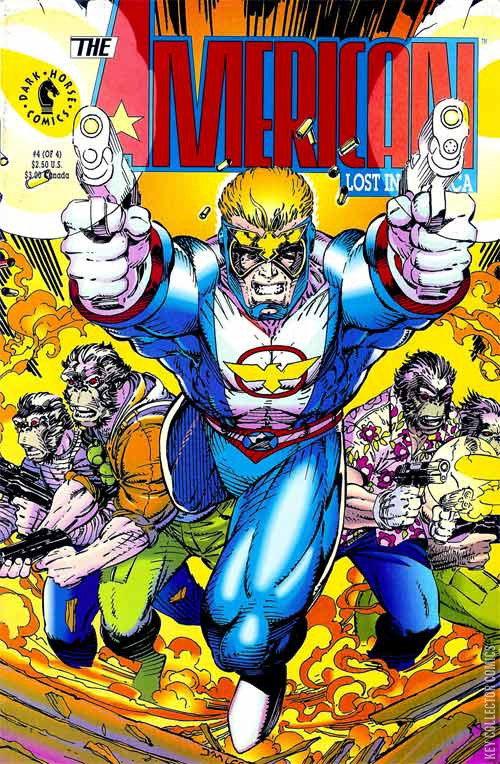
Then, in 1992, Verheiden returned with the four-issue miniseries The American: Lost in America.
Featuring artwork by Chris Marrinan, the sequel continued examining the political usefulness of a superhero.
This time, a governor hoping to improve his reelection prospects wants The American’s public support. Dennis Hough becomes involved in efforts to secure that endorsement, while The American struggles with disillusionment and attempts to manipulate his reputation.
The sequel demonstrated that Verheiden still had plenty to say about the intersection of heroism, politics, and public perception.
The series also benefited from contributions by prominent comic book artists, including covers and illustrations by Mike Mignola, Frank Miller, and Jim Lee.
In 2005, Dark Horse collected the complete saga in a 360-page trade paperback, bringing together the original eight issues, the special, the four-issue sequel, and several shorter stories.
It gave readers an opportunity to experience the entire story without tracking down the individual issues.
The American also holds an important place in the career of Mark Verheiden.
It was among his earliest published comic book projects and helped establish his relationship with Dark Horse Comics.
Verheiden would go on to become closely associated with the publisher’s enormously successful licensed properties, including Aliens and Predator.
He also worked on DC Comics characters, including Superman, and developed a substantial career in television and film, with credits involving Smallville, Battlestar Galactica, and other productions.
Looking back at The American, it is easy to see qualities that would continue throughout Verheiden’s career: an interest in flawed heroes, moral dilemmas, institutional power, and the consequences of choices made under extraordinary circumstances.
The comic was also an early example of Dark Horse’s willingness to support original creator-driven material.
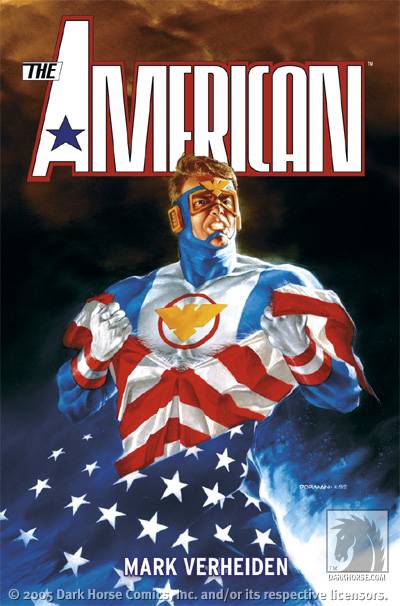 Founded in 1986, Dark Horse was still a young publisher when The American appeared. The company was building its identity as an alternative to the major comic book publishers, giving creators opportunities to experiment with different genres and approaches.
The American was precisely the kind of project that helped establish that identity.
Despite its ambitious storytelling and strong creative talent, The American has never enjoyed the lasting recognition of some other revisionist superhero comics of the period.
That is unfortunate, because the series deserves a place in discussions of independent superhero comics from the late 1980s.
Its central premise remains remarkably relevant.
We still live in a society fascinated by celebrity, political imagery, media manipulation, and the creation of public heroes. The idea that a popular figure might represent an idealized version of something that does not actually exist is hardly limited to the 1980s.
What makes The American particularly interesting is that it does not simply reject the concept of heroism.
Instead, it examines the difference between the ideals a hero represents and the institutions that attempt to control those ideals.
That distinction gives the story greater depth than a straightforward tale about a corrupt superhero.
The American is simultaneously a superhero, a symbol, and a commodity. Different people see different things when they look at him, and much of the conflict emerges from those competing expectations.
There were plenty of independent superhero comics published during the 1980s, but relatively few approached the genre quite like The American.
The series combined the visual traditions of classic superhero comics with political intrigue, investigative journalism, and an examination of American mythology.
Mark Verheiden created a story that was entertaining on the surface while inviting readers to question the nature of heroism itself.
Chris Warner and the other contributing artists gave the project a distinctive visual identity that helped separate it from conventional superhero titles.
And Dark Horse Comics provided a home for a story that might not have fit comfortably within the established superhero universes of Marvel or DC.
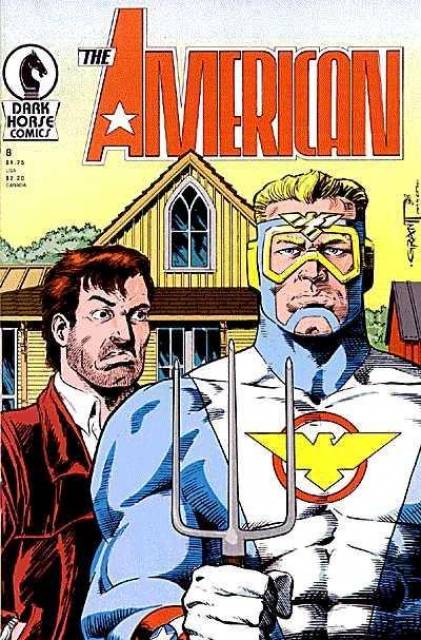 For readers interested in the development of independent comics, The American represents an important moment when creators were discovering that superhero stories could explore subjects far beyond colorful costumes and battles with supervillains.
Nearly four decades after its debut, the series remains worth discovering.
The American may have been created to represent everything great about his country, but his greatest contribution to comics was encouraging readers to question the difference between the symbol and the truth.
And that is what makes The American a superhero worth remembering.
About Author
