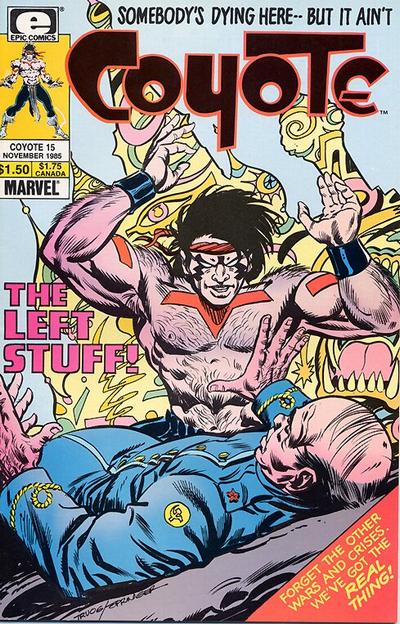
 During the early 1980s, the American comic book industry was transforming. Independent publishers were challenging Marvel and DC Comics, creators were demanding greater control over their work, and readers were discovering that superheroes did not necessarily have to follow the traditional rules. Among the more unusual characters to emerge from this period was Coyote, a supernatural superhero whose adventures combined Native American mythology, political intrigue, fantasy, science fiction, and the unpredictable nature of a trickster god.
Created by writer Steve Englehart and artist Marshall Rogers, Coyote was an ambitious experiment in superhero storytelling. Although the character is most closely associated with Marvel’s Epic Comics imprint, his origins actually predate the Epic series.
Coyote never achieved the commercial recognition of the X-Men, Spider-Man, or the Avengers, but the series deserves a place in comic book history. It challenged storytelling conventions, explored mature themes, and provided an early professional opportunity for an artist who would eventually become one of the biggest names in comics: Todd McFarlane.
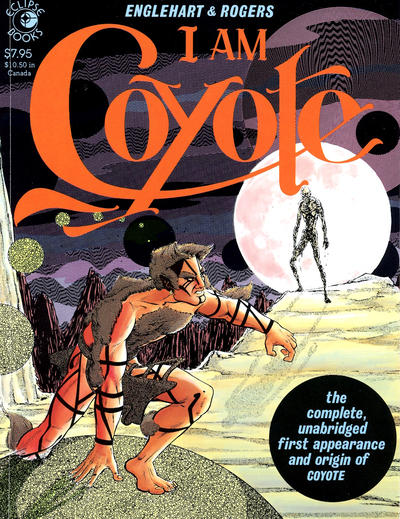
Coyote made his first appearance in Eclipse, the Magazine #2, published by Eclipse Comics in 1981. The character’s initial adventures continued through issue #8, forming an extended story illustrated by Marshall Rogers.
Englehart and Rogers had previously worked together on the acclaimed Detective Comics stories featuring Batman during the 1970s. Their collaboration on Coyote, however, allowed them to pursue something considerably different.
 Instead of creating another conventional costumed crimefighter, they developed a character inspired by the trickster figure found in several Native American storytelling traditions.
In many of these traditions, Coyote is an unpredictable being associated with transformation, cleverness, deception, and the disruption of established order. Englehart adapted those ideas into a modern superhero who could move between the familiar world and a much stranger supernatural reality.
The original stories were experimental in both their structure and presentation. Rogers’ detailed artwork helped establish a world in which mythology and modern civilization coexisted.
Eclipse Comics subsequently collected the material in the graphic album I Am Coyote, published in 1984.
The central character is Sylvester “Sly” Xavier Santangelo, a young man whose identity and destiny become intertwined with the supernatural world of the Coyote.
 Unlike traditional superheroes who acquire their powers through radioactive accidents, scientific experiments, or alien heritage, Coyote’s abilities are rooted in mythology and otherworldly forces.
His adventures involve extraordinary transformations, encounters with supernatural beings, and travel through dimensions that challenge ordinary concepts of reality.
Coyote possesses abilities associated with shape-shifting and movement between dimensions, but his most interesting quality is his unpredictable personality.
He is not always the noble, self-sacrificing hero readers might expect. Like the mythical trickster who inspired him, Coyote can be impulsive, rebellious, mischievous, and difficult to understand.
His adventures also place him in conflict with powerful individuals and organizations whose interests extend well beyond conventional supervillain schemes.
This combination of a flawed protagonist, supernatural mythology, and international intrigue gave the character a distinctive identity.
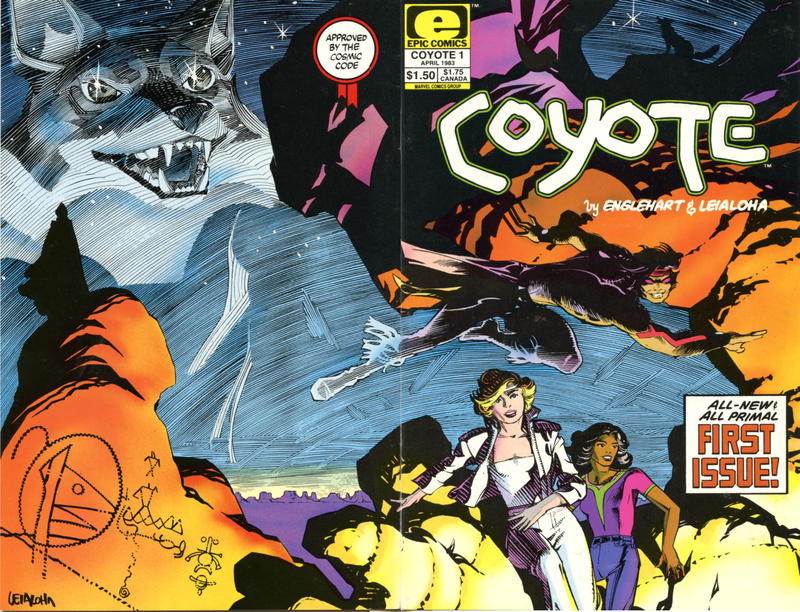
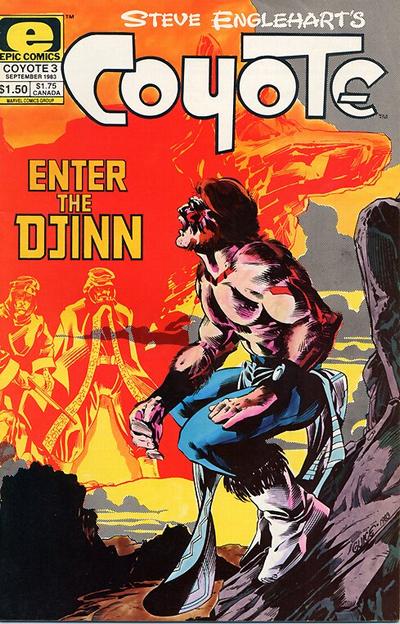 In 1983, Marvel Comics launched a new Coyote series through its Epic Comics imprint.
Epic was designed to give established and emerging creators greater creative freedom, including opportunities for creator-owned properties. Unlike traditional Marvel publications, Epic titles could explore subjects and storytelling approaches that might have been difficult to accommodate within the mainstream superhero universe.
Coyote was an excellent example of that philosophy.
The first Epic issue was cover-dated April 1983 and featured a 32-page main story written by Steve Englehart, with pencils and inks by Steve Leialoha, colors by Steve Oliff, and lettering by Tom Orzechowski.
The new series continued the character’s adventures from the earlier Eclipse stories rather than beginning with a completely unrelated version.
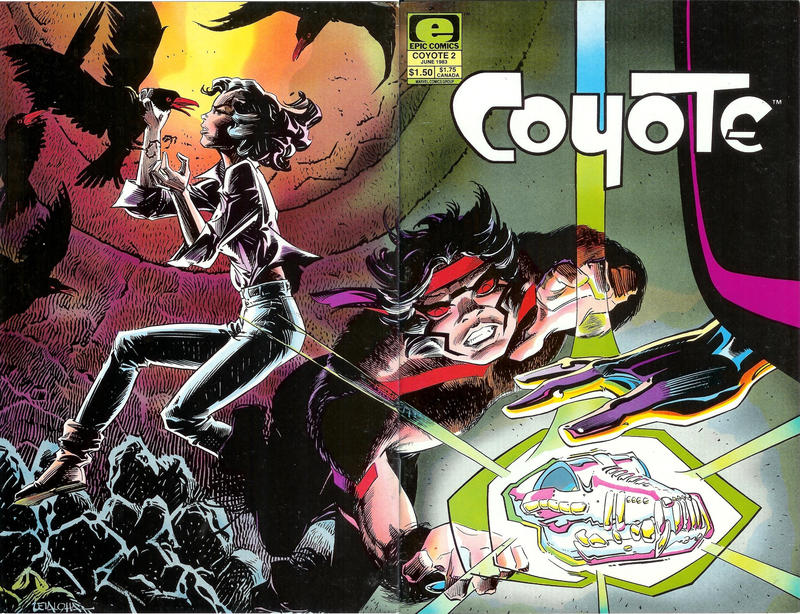
Leialoha brought an energetic style to the first two issues, helping translate the supernatural atmosphere of the original Marshall Rogers material into a full-color comic book series.
For readers accustomed to conventional Marvel superheroes, Coyote offered a very different experience. Its mythology was unusual, its characters were morally complicated, and its storytelling could shift from humor to violence or metaphysical speculation.
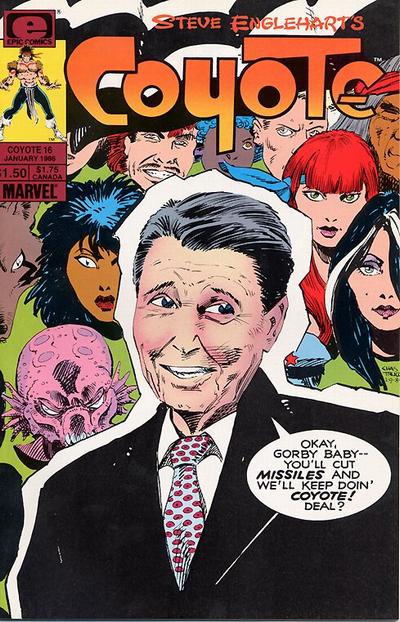
The series lasted 16 issues, with the final issue cover-dated January 1986.
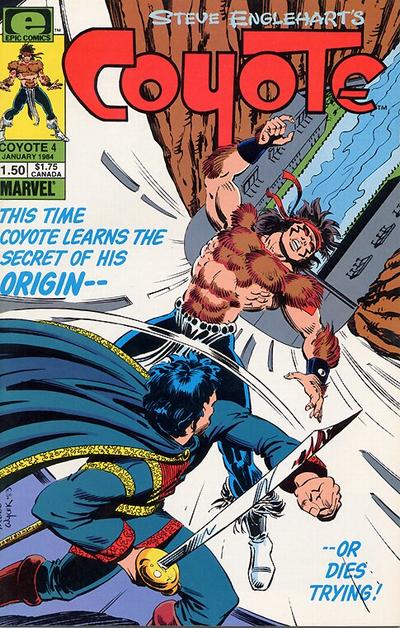 One of the more fascinating aspects of Coyote was its willingness to combine seemingly unrelated genres.
The series included supernatural creatures, secret societies, mystical transformations, political conspiracies, and even extraterrestrial threats. Englehart was never particularly interested in keeping his fictional world confined to a single genre.
Among the recurring characters were Harry Long Horse, Pamela Martindale, Natalia “Tally” Gianetti, and the mysterious Coyote God.
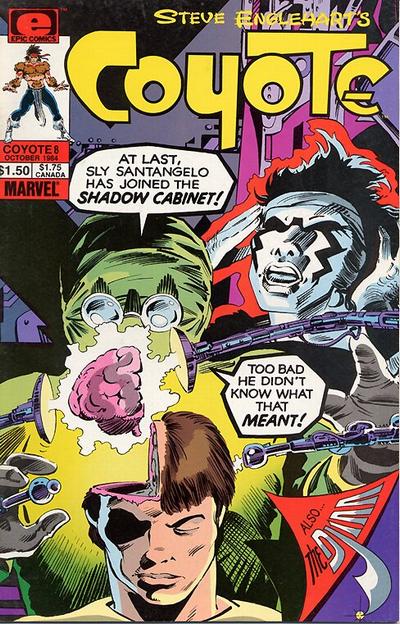
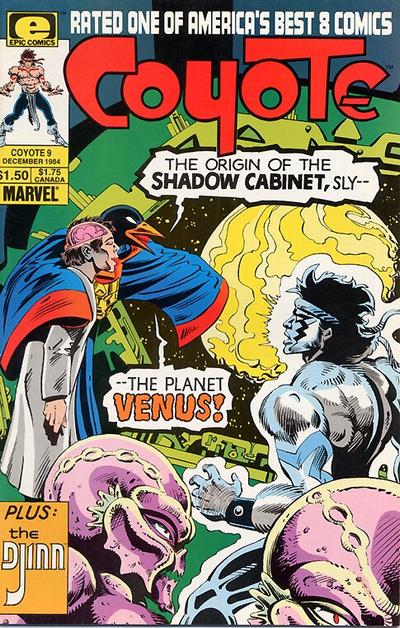
The Shadow Cabinet, a secretive organization involved in international affairs, provided a more political dimension to the series. Its schemes demonstrated that Coyote’s enemies could be just as dangerous in government offices as they were in supernatural realms.
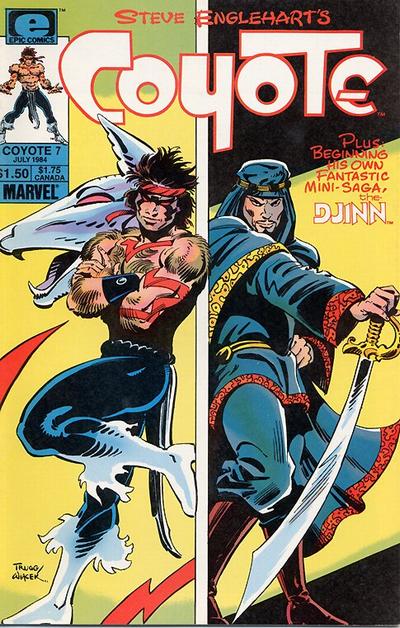
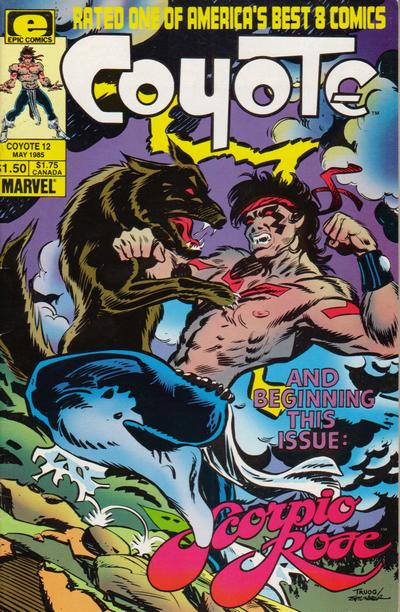
Other characters, including Scorpio Rose, Djinn, and Slash, expanded the mythology. These characters were significant enough to receive their own backup features, giving readers a broader understanding of the universe Englehart was constructing.
By the final issue, the story had become so ambitious that Coyote and his allies were attempting to prevent a conspiracy involving Soviet leader Mikhail Gorbachev, the Shadow Cabinet, and a plot to replace President Ronald Reagan with a clone.
It was precisely the kind of outrageous combination of mythology, superheroes, and political satire that distinguished Coyote from most mainstream titles.
Although Steve Englehart remained the principal writer throughout the Epic series, the artwork changed considerably during its publication.
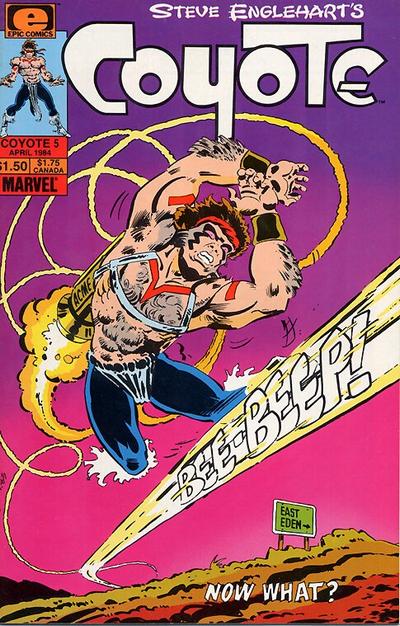 Steve Leialoha illustrated the first two issues, establishing a visual approach that complemented Englehart’s unconventional storytelling.
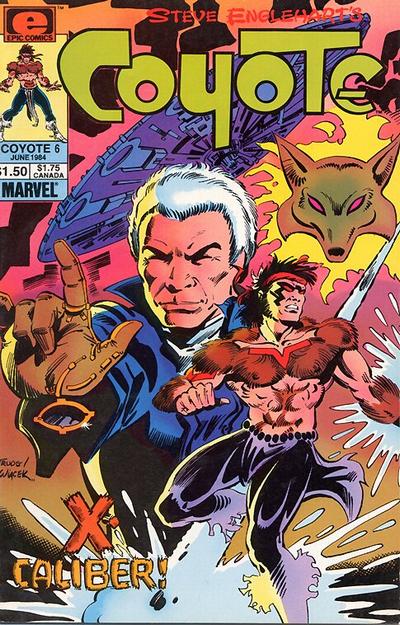
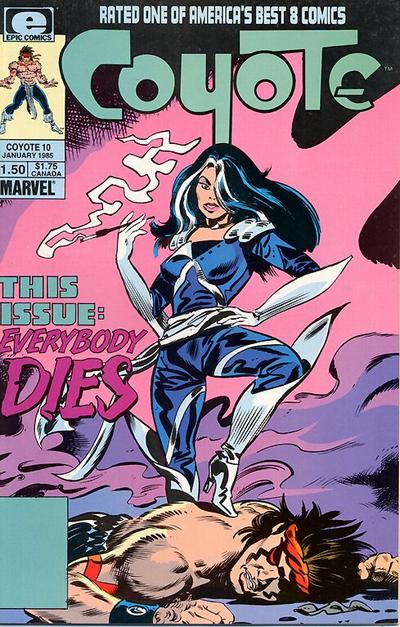
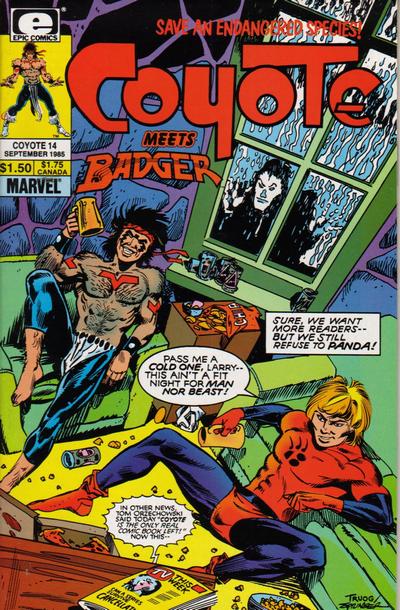
Jackson Guice followed for an issue before Chas Truog became the principal artist for the remainder of the series.
Truog’s work helped maintain continuity as the stories became increasingly complicated, moving between supernatural encounters, character relationships, and political adventures.
Unfortunately, the changes in artists also created production difficulties.
According to Epic editor Archie Goodwin, Leialoha’s departure after the second issue caused scheduling problems that the title never completely overcame. These difficulties contributed to the eventual cancellation of the series.
Nevertheless, the comic’s changing artistic lineup remains an interesting snapshot of the developing talent working in American comics during the 1980s.
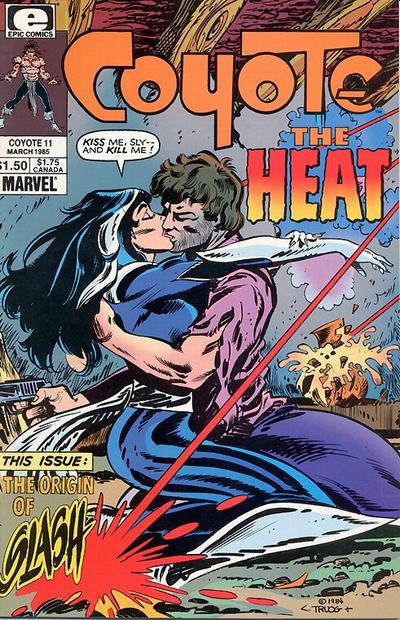
One of the most historically important issues of Coyote is #11, cover-dated March 1985.
The issue featured the first published professional comic book artwork by Todd McFarlane, years before he became famous for his work on The Amazing Spider-Man and his creation of Spawn.
McFarlane illustrated an 11-page backup story featuring Slash, written by Steve Englehart and inked by Art Nichols.
 McFarlane had spent considerable time submitting artwork to publishers while attempting to enter the comic book industry. His Coyote samples eventually reached Englehart, who offered him professional work.
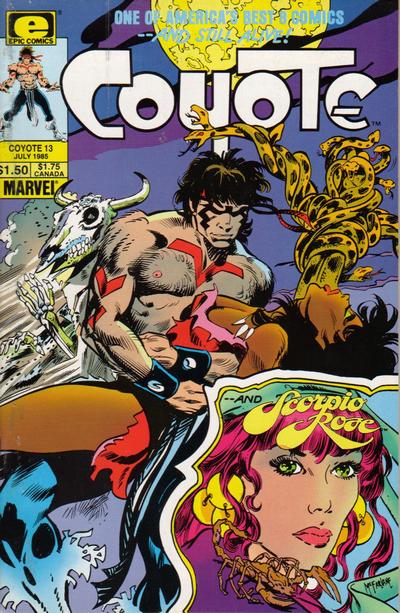
His involvement continued with artwork for the Scorpio Rose backup feature in Coyote #12, and he contributed cover artwork to issue #13.
For collectors, these issues represent an important milestone in McFarlane’s career.
There is something particularly appropriate about one of the most influential independent comic book creators of the 1990s beginning his career on a creator-owned series published through Epic Comics.
Long before Spawn became one of Image Comics’ biggest successes, McFarlane was developing his professional storytelling skills in the pages of Coyote.
Despite its originality and talented contributors, Coyote struggled to maintain a consistent publication schedule.
The series ultimately concluded with issue #16, cover-dated January 1986.
The final adventure, “Flyin’ United!,” brought together Coyote, Scorpio Rose, Djinn, Slash, and other important characters in a story involving the Soviet Union, extraterrestrials, and the Shadow Cabinet.
 Englehart included a closing statement expressing hope that the character might return.
Although Coyote had attracted critical attention and developed an appreciative readership, its commercial success was not sufficient to sustain the ongoing series.
Its cancellation brought an end to one of Epic’s more unusual superhero experiments.
Coyote was not completely forgotten.
In 2005, Image Comics began collecting the original material in a series of volumes that brought the character’s adventures back into print.
The five-volume Coyote Collection preserved the character’s history, beginning with the original Eclipse material and continuing through all 16 issues of the Epic series.
The collections also included related features such as Scorpio Rose and Djinn, allowing readers to explore the wider fictional world surrounding Coyote.
For comic book historians, these collections provided an opportunity to revisit a series that had received relatively little attention since the 1980s.
They also demonstrated how the changing comic book marketplace could give older creator-owned properties another opportunity to reach readers.
 Looking back, Coyote occupies an interesting position in American comic book history.
It was part of the movement toward greater creator ownership that helped reshape the industry during the 1980s and 1990s. It also demonstrated that superhero comics could incorporate mythology, sexuality, politics, metaphysical concepts, and unconventional storytelling without necessarily resembling the familiar Marvel or DC formulas.
Its origins at Eclipse Comics placed it alongside other independent experiments that challenged established publishing practices. Its continuation at Epic Comics demonstrated Marvel’s willingness, at least through that imprint, to support material outside its traditional superhero universe.
The series was not always an easy read. Its mythology could become complicated, and its frequent shifts in artistic direction sometimes affected its visual consistency. Yet those imperfections were part of an ambitious experiment in creating something different.
Perhaps its greatest contribution was showing what could happen when creators were given the freedom to pursue ideas that would have been difficult to fit into an established corporate superhero universe.
For readers discovering the series today, Coyote offers a fascinating glimpse into an era when independent and creator-owned comics were beginning to change the industry.
It is also a reminder that some of the most interesting comic books are not necessarily the ones that achieve lasting commercial success.
Coyote may never have become a household name, but its combination of mythological storytelling, creator ownership, and early work by future industry stars gives it a distinctive place in comic book history.
More than four decades after his debut, the trickster superhero remains a reminder that sometimes the most memorable characters are the ones who refuse to follow the rules.
About Author
