
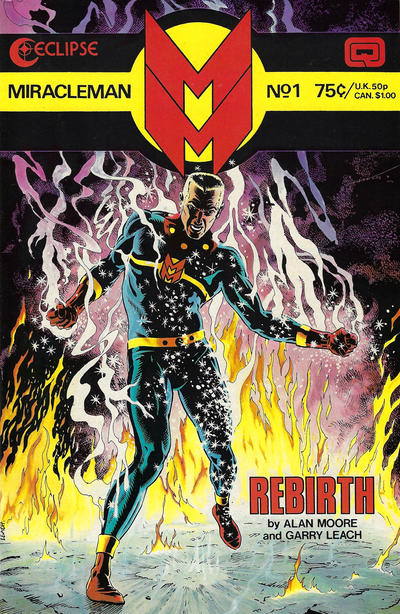
 Long before Watchmen redefined the superhero genre, Alan Moore was already challenging everything readers thought they knew about costumed heroes. His work on Marvelman, later renamed Miracleman, transformed a nearly forgotten British superhero into one of the most groundbreaking characters in comic book history. What began as a nostalgic revival became a sophisticated exploration of power, identity, morality, and the terrifying consequences of superhuman existence.
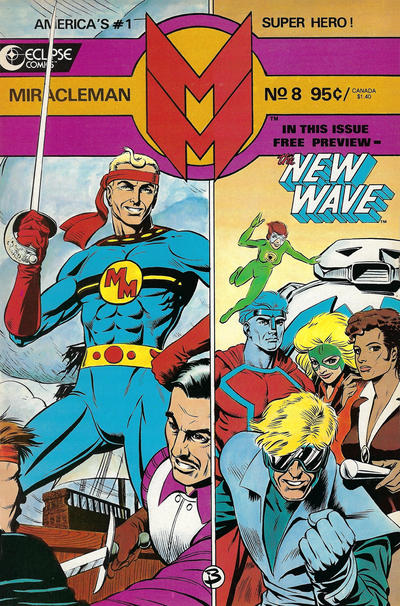
Miracleman actually began life as a replacement for Captain Marvel! In 1954, British publisher L. Miller & Son needed new material after the original Captain Marvel stories from Fawcett Comics were no longer available. Writer and artist Mick Anglo created Marvelman, a remarkably similar superhero whose alter ego, young Micky Moran, transformed into a powerful champion by shouting “Kimota!” Instead of the magical “Shazam!” used by Captain Marvel, Marvelman’s transformation word was simply “atomic” spelled backward. Like Captain Marvel, he had a superhero family, including Young Marvelman and Kid Marvelman, and enjoyed colorful adventures battling criminals, monsters, and mad scientists. The character remained popular in Britain throughout the 1950s before fading from publication in the early 1960s.
Nearly twenty years later, Marvelman received an extraordinary second life. In March 1982, British anthology magazine Warrior #1 introduced Alan Moore’s dramatic reinterpretation of the character, illustrated by Garry Leach. Rather than continuing the innocent adventures of the 1950s, Moore imagined what would happen if a superhero from that era suddenly reappeared in a realistic modern world. His protagonist, Michael Moran, was now a middle-aged journalist plagued by strange dreams and mysterious headaches. He had no memory of his former existence as Marvelman until a terrorist incident triggered the return of his forgotten transformation word. With a single cry of “Kimota!” Moran rediscovered powers that made him virtually invincible.
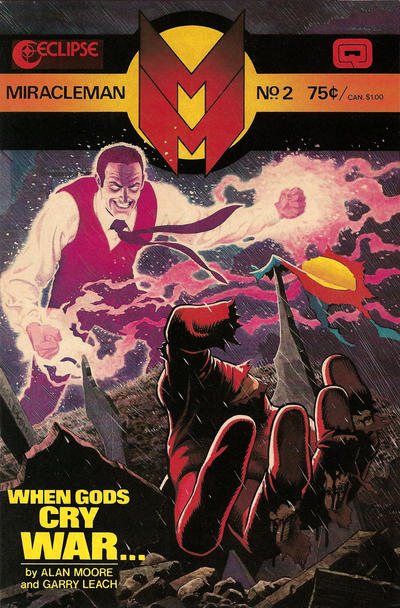 Moore’s approach was revolutionary because he refused to accept the conventions of traditional superhero comics at face value. If a man could fly, survive nuclear explosions, and possess almost limitless strength, how would that affect his relationship with ordinary humanity? What would happen to his marriage? Could governments possibly tolerate the existence of such an individual? And perhaps most importantly, what would prevent an enormously powerful superhero from becoming an equally powerful monster? These questions established the foundation for a series that would grow increasingly ambitious, disturbing, and philosophically challenging.
One of Moore’s cleverest innovations was his treatment of the character’s original adventures. Instead of simply declaring that the whimsical stories of the 1950s had never happened, he incorporated them directly into his new mythology. The colorful battles, bizarre villains, and seemingly magical transformations were revealed to have been artificial memories implanted into the minds of experimental superhumans. Marvelman and his companions had been created through a secret British government project, with their fantastic adventures serving as a form of psychological conditioning. The scientist Emil Gargunza, originally a conventional mad scientist in the Mick Anglo stories, became a sinister figure responsible for manipulating the heroes and concealing the truth about their origins.
Perhaps Moore’s most frightening reinvention involved Kid Marvelman. Originally one of Marvelman’s loyal young companions, Johnny Bates had retained his superhuman abilities while Moran had forgotten his heroic identity. Bates spent years possessing extraordinary powers without anyone capable of challenging him. During that time, he became a wealthy businessman, but beneath his respectable appearance lurked a sadistic personality that regarded ordinary people as insignificant. Moore transformed a cheerful sidekick into one of the most terrifying villains in superhero comics. Kid Marvelman was not interested in conventional criminal activities. He enjoyed power for its own sake and delighted in demonstrating his superiority over humanity.
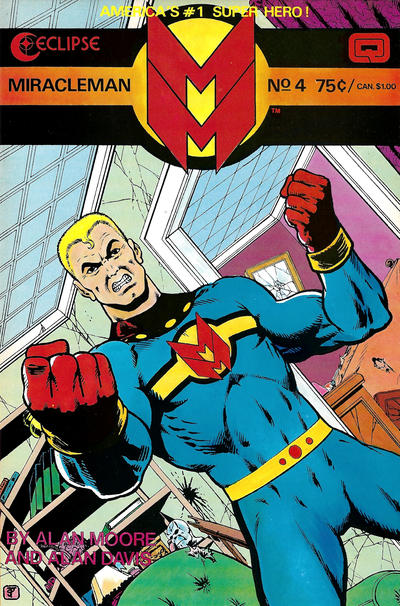
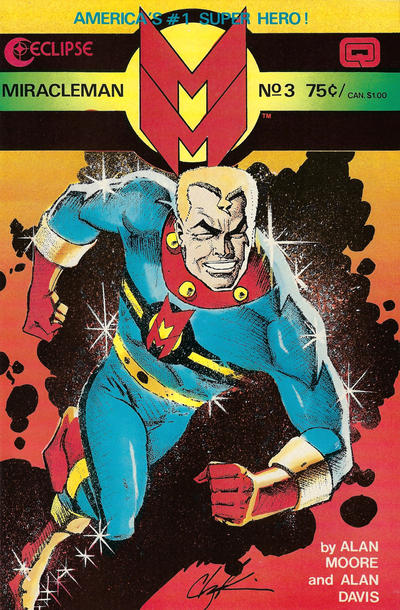 The revival quickly established itself as one of the most innovative features in Warrior. Garry Leach’s detailed, realistic artwork gave the stories an unsettling credibility that contrasted sharply with traditional superhero illustrations. Alan Davis subsequently contributed his own distinctive style, bringing expressive characterizations and dynamic action sequences to Moore’s increasingly elaborate scripts. Together, the creators developed a superhero narrative that combined psychological drama, science fiction, mystery, and horror.
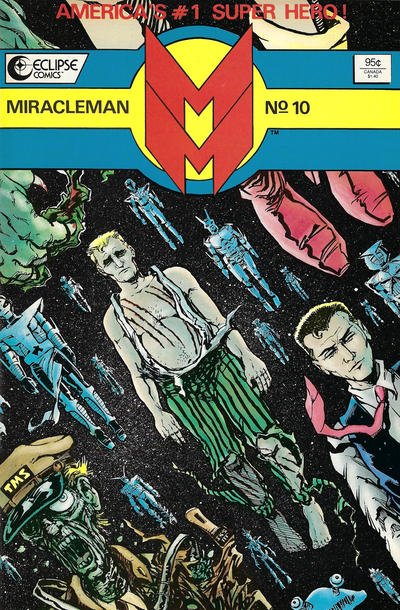
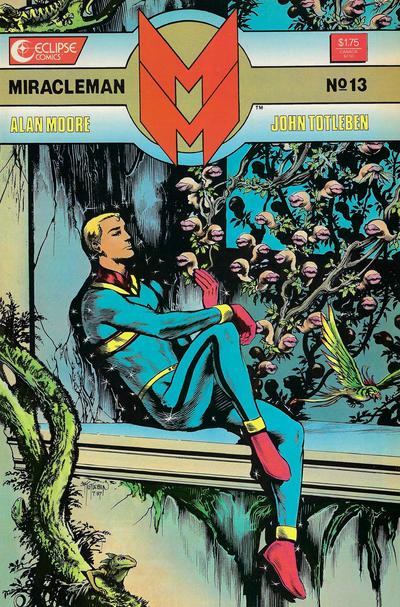
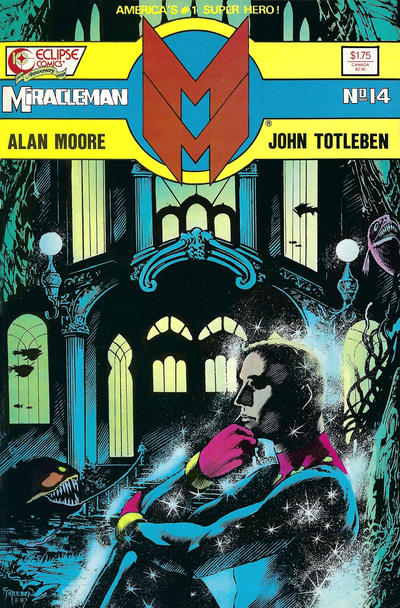
When Warrior ceased publishing in 1985, the story was still unfinished. American independent publisher Eclipse Comics acquired the opportunity to bring Moore’s work to readers in the United States. However, the character’s original name presented a problem. Marvel Comics objected to the use of Marvelman, and the character was renamed Miracleman for the American editions. Eclipse began publishing Miracleman in 1985, initially presenting colorized versions of the British material before continuing the story with new chapters. The series introduced Moore’s groundbreaking work to a much larger American audience.
As the story progressed, Moore pushed the boundaries of superhero storytelling even further. Miracleman’s relationship with his wife, Liz, became increasingly complicated as his extraordinary abilities separated him from ordinary human experience. Although Michael Moran and Miracleman shared memories, their physical forms and capabilities were radically different. Moore explored the emotional consequences of that division, questioning whether a superhuman being could genuinely maintain the relationships and values of his former human life.
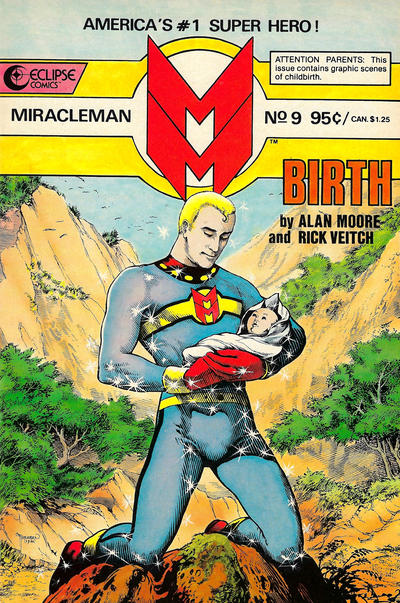
 The birth of Miracleman’s daughter, Winter, in Miracleman #9 became another landmark moment. Illustrated by Rick Veitch, the issue depicted childbirth with an unusual degree of realism for a superhero comic published in 1986. Rather than treating the event as a sentimental interlude, Moore presented it as a profound moment that challenged Miracleman’s understanding of humanity and his own existence. Winter’s extraordinary nature also suggested that the emergence of superhuman beings represented something far greater than the arrival of another generation of costumed adventurers.
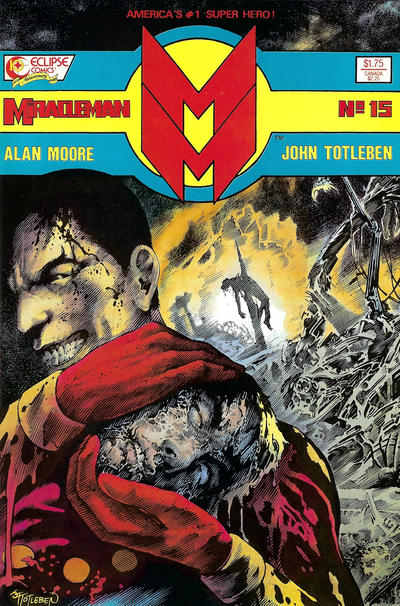
The series reached its most horrifying moment in Miracleman #15. Kid Miracleman returned and unleashed a devastating assault on London, slaughtering thousands of innocent people and reducing much of the city to ruins. Artist John Totleben illustrated the destruction in graphic, nightmarish detail. Moore deliberately rejected the familiar superhero convention in which powerful characters exchange devastating blows while civilian casualties remain conveniently invisible. Here, the consequences of superhuman violence were impossible to ignore. When beings with godlike abilities fought, ordinary people suffered terribly.
That confrontation fundamentally changed Miracleman’s understanding of his responsibilities. If he possessed the power to reshape civilization, was he morally obligated to use it? Could humanity be trusted to govern itself when beings with vastly superior abilities and intelligence existed among them? These questions became central to Moore’s concluding storyline, Olympus, which culminated in Miracleman #16 in 1989.
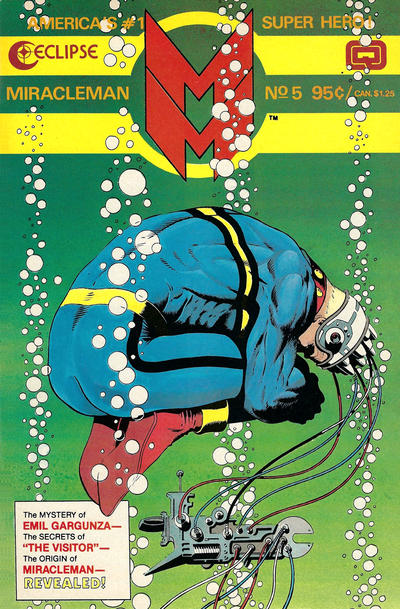 By the conclusion of Moore’s run, Miracleman had evolved beyond the traditional superhero role. Rather than simply preventing crimes and defeating villains, he and his superhuman allies began reconstructing human civilization. Advanced technology and extraordinary abilities offered the possibility of eliminating war, disease, poverty, and many of humanity’s other longstanding problems. The result was a utopian society governed by beings who possessed powers ordinary humans could scarcely comprehend. Yet beneath the apparent paradise lay an uncomfortable question: Had Miracleman saved humanity, or had he taken away its freedom to determine its own future?
This was the ultimate achievement of Alan Moore’s reinvention. He began with an obscure British superhero whose adventures had been inspired by Captain Marvel and gradually transformed him into a figure whose very existence challenged the foundations of human civilization. Miracleman was no longer simply a powerful man wearing a colorful costume. He had become something resembling a god, and Moore forced readers to confront the implications of that transformation.
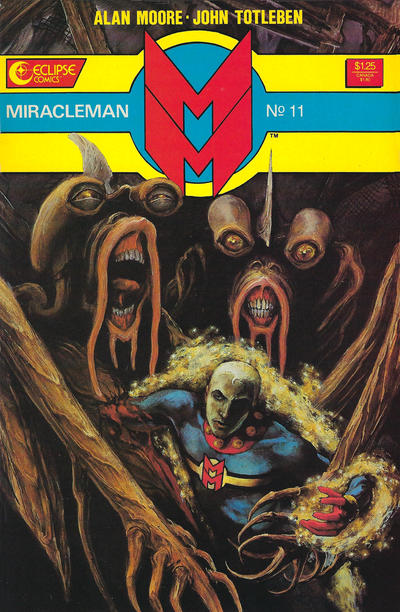
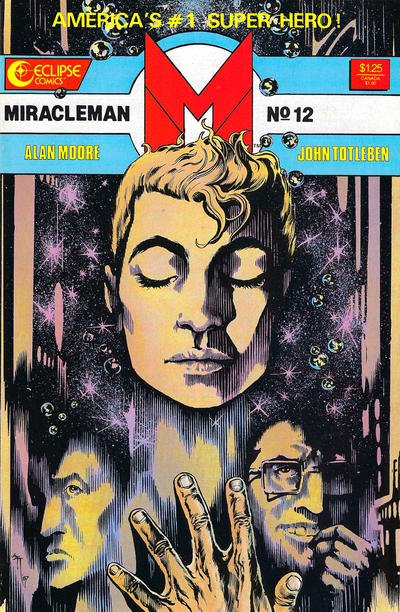
The artistic development of the series was equally remarkable. Garry Leach established its realistic visual foundation, Alan Davis brought fluidity and dramatic expression to the early adventures, Rick Veitch contributed memorable and emotionally powerful sequences, and John Totleben elevated the concluding chapters with extraordinarily intricate illustrations. Their collective work helped establish Miracleman as a visually sophisticated comic that demonstrated the storytelling possibilities available outside the mainstream superhero formula.
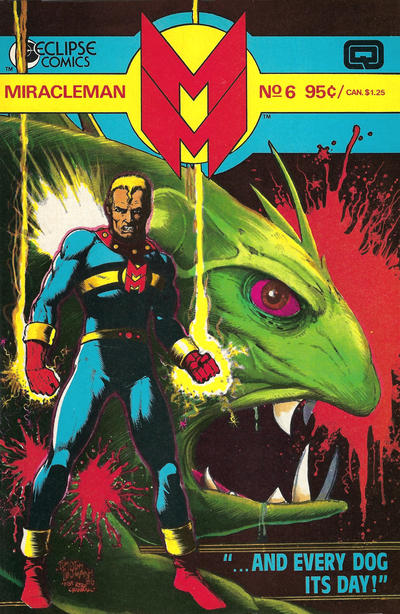 Moore’s Miracleman also occupies an important place in the history of independent comics. While Marvel and DC dominated the American superhero market, Eclipse Comics demonstrated that independent publishers could present ambitious, mature superhero stories capable of competing with anything produced by the industry’s largest companies. The series became an influential example of how familiar superhero concepts could be transformed through unconventional storytelling and creative experimentation.
Its influence extended well beyond its original publication. Moore’s examination of absolute power, morally ambiguous heroes, government conspiracies, and the realistic consequences of superhero violence anticipated themes that would become increasingly prominent throughout the late 1980s and 1990s. Although Watchmen would ultimately receive greater mainstream recognition, Miracleman demonstrated that Moore had already been exploring many of his most important ideas several years earlier.
What makes Alan Moore’s Miracleman particularly remarkable is that it never abandoned the fundamental appeal of superhero fiction. The series still featured extraordinary transformations, spectacular battles, terrifying villains, and incredible demonstrations of power. Moore simply in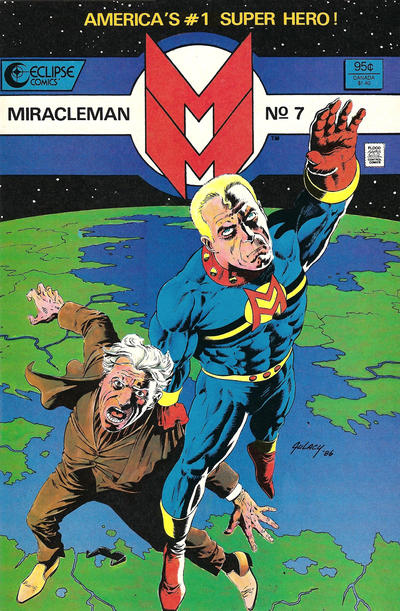 sisted that these elements have consequences. Superheroes could no longer exist in a world that remained conveniently unchanged by their presence. Their actions mattered, their abilities carried enormous responsibilities, and their existence threatened to overturn everything humanity believed about itself.
By the time Moore completed his story, the character who had once shouted “Kimota!” to battle colorful villains had become one of the most complex figures in comic book history. His journey from forgotten childhood hero to godlike ruler represented a radical reimagining of the superhero myth.
Alan Moore did more than revive Marvelman. He used the character to demonstrate that superhero comics could address adult themes, challenge philosophical assumptions, and tell stories of extraordinary emotional and intellectual depth. His work helped establish the foundation for a generation of sophisticated superhero storytelling and remains a landmark achievement in the medium.
About Author
