
Thanks to writer John Broome, the Flash’s archenemies often had singular, quirky and engaging motivations.
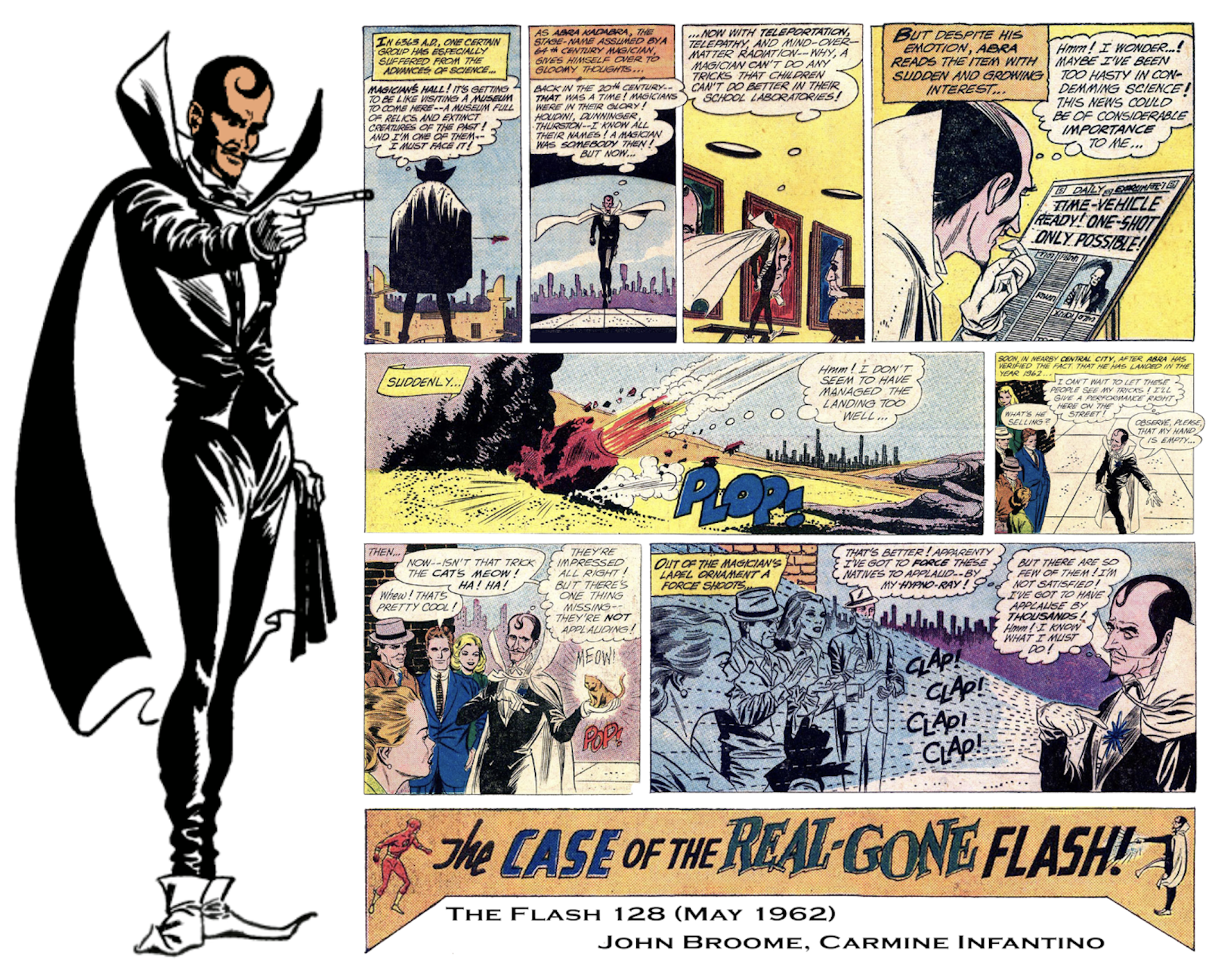
Captain Boomerang was originally just a talented Australian hired by the Wiggins Game Company to promote a toy craze. Captain Cold was a romantic, forever falling haplessly in love with various women. And the 64th century magician Abra Kadabra also just wanted to be loved — but by an audience.
Abra Kadabra fervently desired to be a performing stage magician in a society so advanced it had completely outgrown them.
“Any sufficiently advanced technology is indistinguishable from magic,” science fiction author Arthur C. Clarke wrote — a fact that renders Abra Kadabra’s career dreams hopeless in his own era, obviously.
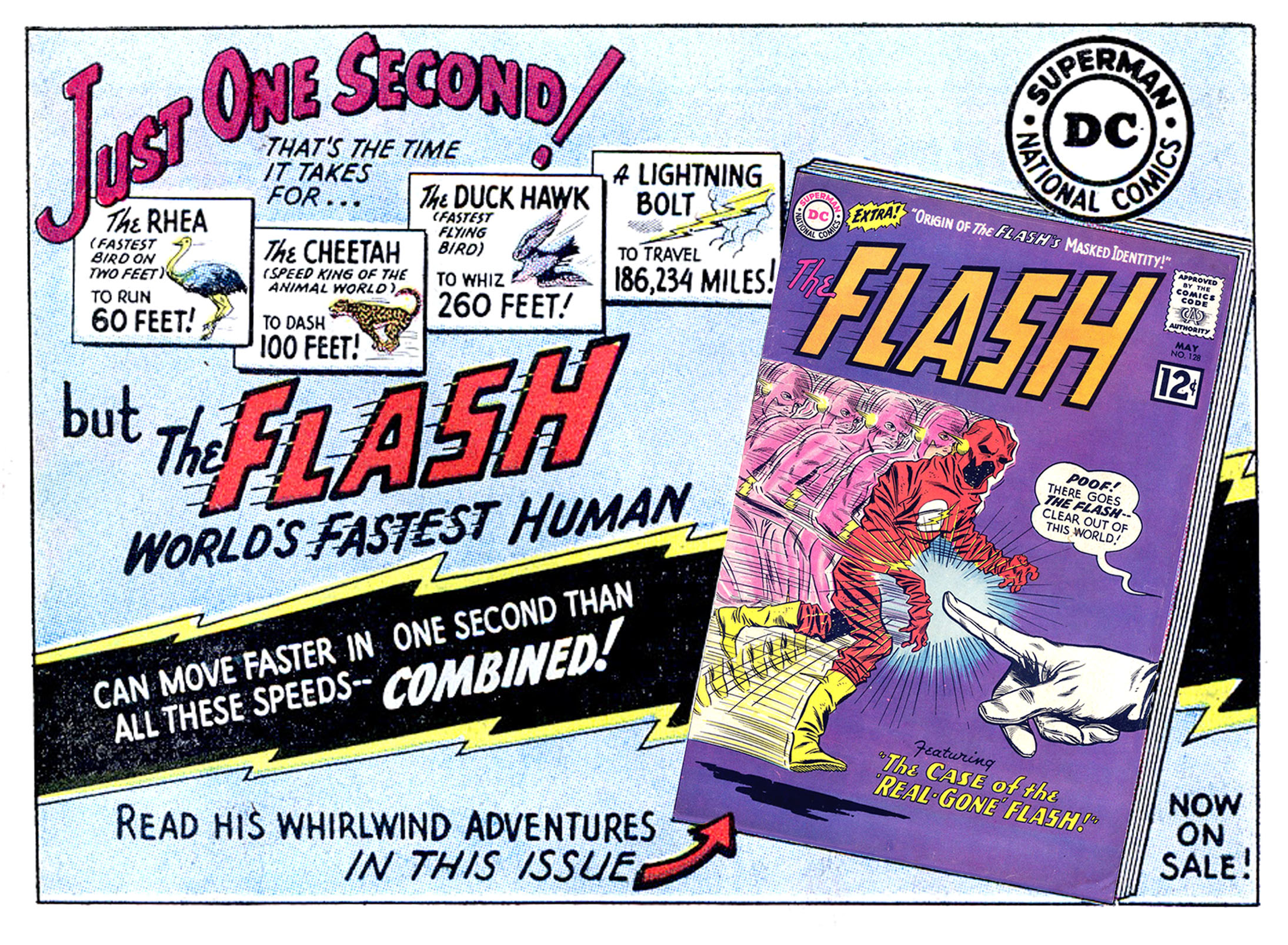
 Remarking on the super-villain’s origin (The Case of the Real-Gone Flash, The Flash 128, May 1962), comics historian Michael E. Grost observed that it’s “…more pathetic than sinister. His various thefts are done not for gain, but to try to publicize his stage act. His need for applause and public celebrity strikes a familiar Broome theme, the corrupting side of the search for fame.”
“Trickster characters like Abra Kadabra often cause difficulties for authority figures, in fiction books and comics. And they are often shown enjoying doing this. However, that is not shown as a motive for Abra Kadabra … He is instead interested exclusively in fame and applause.”
And if applause isn’t forthcoming, the ovation-obsessed outlaw can compel it with futuristic mind-control technology.
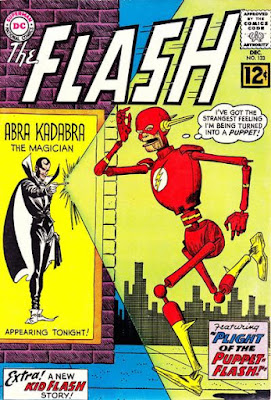
Abra Kadabra travels back to the 20th century to wow audiences, and repeatedly runs afoul of the Flash, returning in The Plight of the Puppet-Flash (1962) and The See-Nothing Spells of Abra Kadabra (1967).
“Kadabra never deigned to work with the rest of the Flash’s Rogue’s Gallery,” observed Kelson Vibber in The Flash Companion. “He rarely worked with allies of any kind — willing ones, anyway — and Central City’s other criminals were beneath his consideration. They would only hog the limelight.”
About Author
