Archaeological evidence suggests early humans developed archery for hunting and warfare between 64,000 and 71,000 years ago. The earliest surviving wooden bows date back some 8,000 to 10,000 years.
And when you think about it, an arrow — loosed anonymously from a distance and delivering a fatal verdict — would have been an impressive power to possess even as late as the Middle Ages.
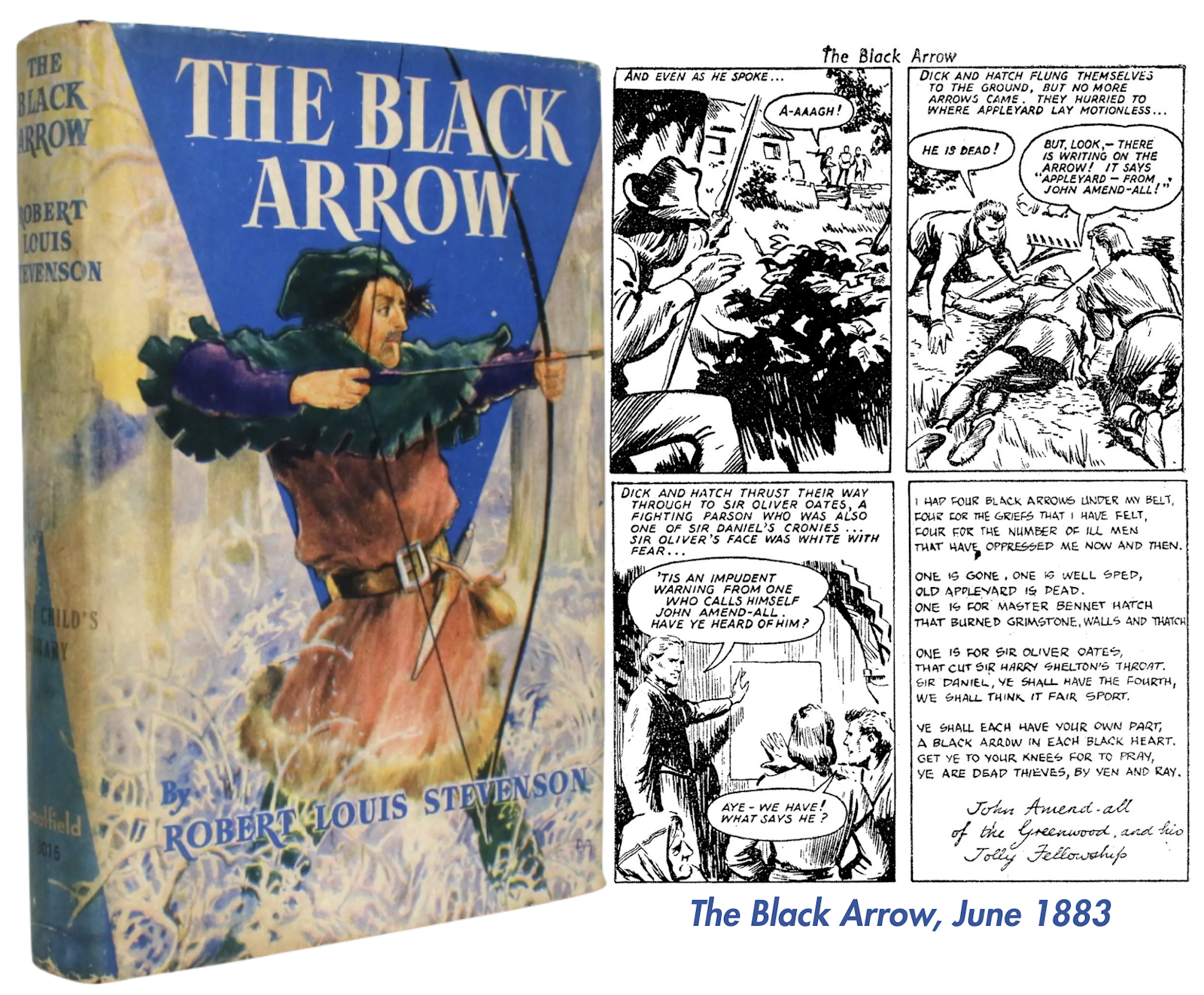
And that idea is central to Robert Louis Stevenson’s 1883 novel, The Black Arrow.
The novel, tailor-made for comic book adaptation, might be seen as a 19th century precursor to Zorro and similar champions.
“The Black Arrow shares striking structural and thematic parallels with modern superhero comics, particularly the gritty, archer-focused vigilante stories of characters like Green Arrow or Robin Hood adaptations,” critics have observed. “Both genres rely heavily on secret identities, masked/coded branding, dual-purpose weapons and coming-of-age power fantasies.”
“John Amend-All” is the secret identity of Ellis Duckworth, leader of a justice-seeking outlaw band operating in 15th-century England during the Wars of the Roses between the Houses of York and Lancaster. The Black Arrow is both their weapon and their symbol.
Duckworth isn’t the novel’s protagonist, however. The book is a bildungsroman focused on the maturation of 18-year-old Dick Shelton. The villain is his guardian, Sir Daniel Brackley, who’s responsible for his father’s murder, and Dick must join the Tunstall Forest outlaw band to fight him.
A “real” John Amend-All existed, by the way.
In the 1450 Cade’s Rebellion against official corruption, the leader Jack Cade marched on London with his army.
“Among his followers, Cade’s dedication to having the people’s complaints heard and restoring order within both local and central governments earned him the nickname ‘John Mend-all’ or ‘John Amend-all,’” Wikipedia notes. “It is not known whether Cade himself chose the name or not.”
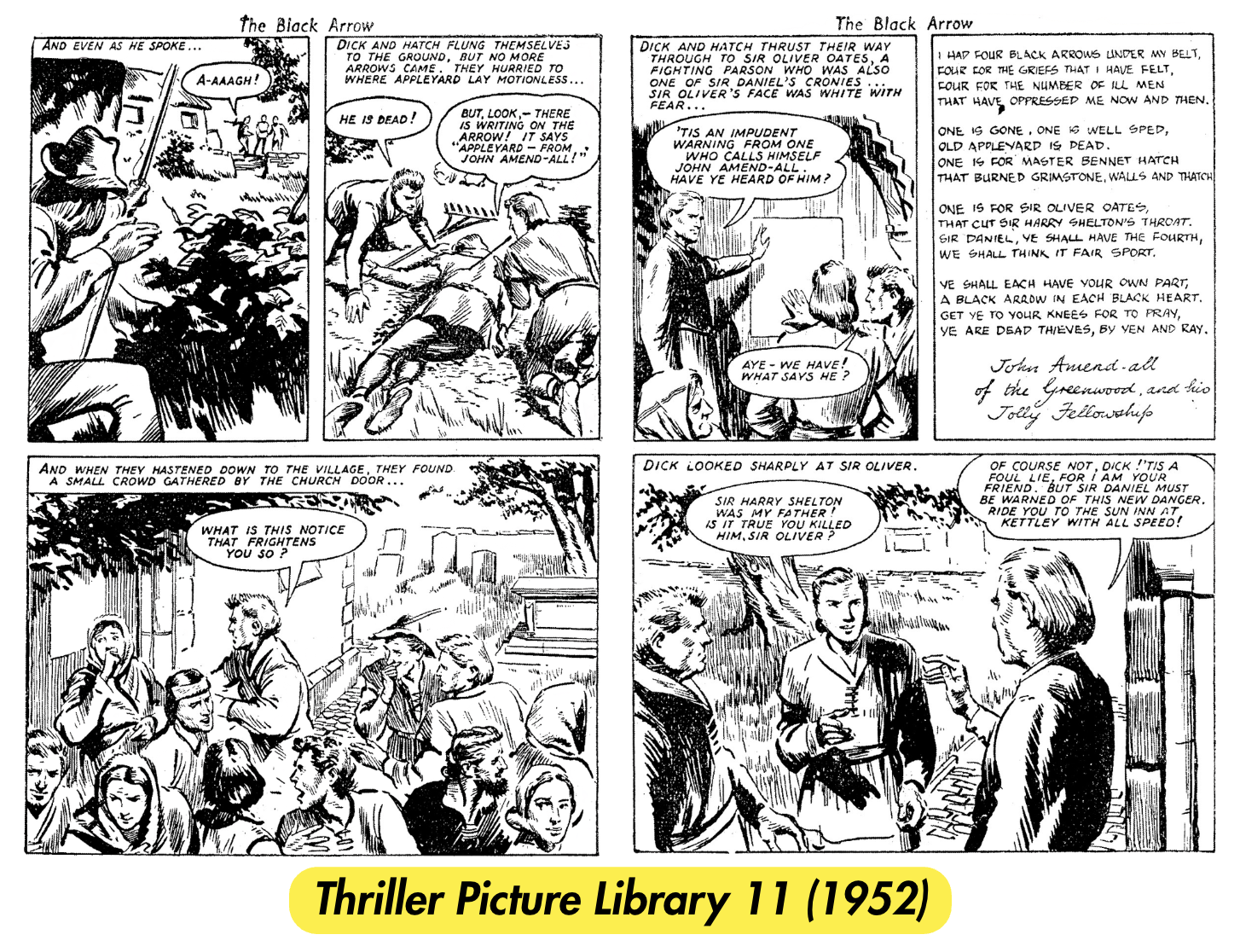
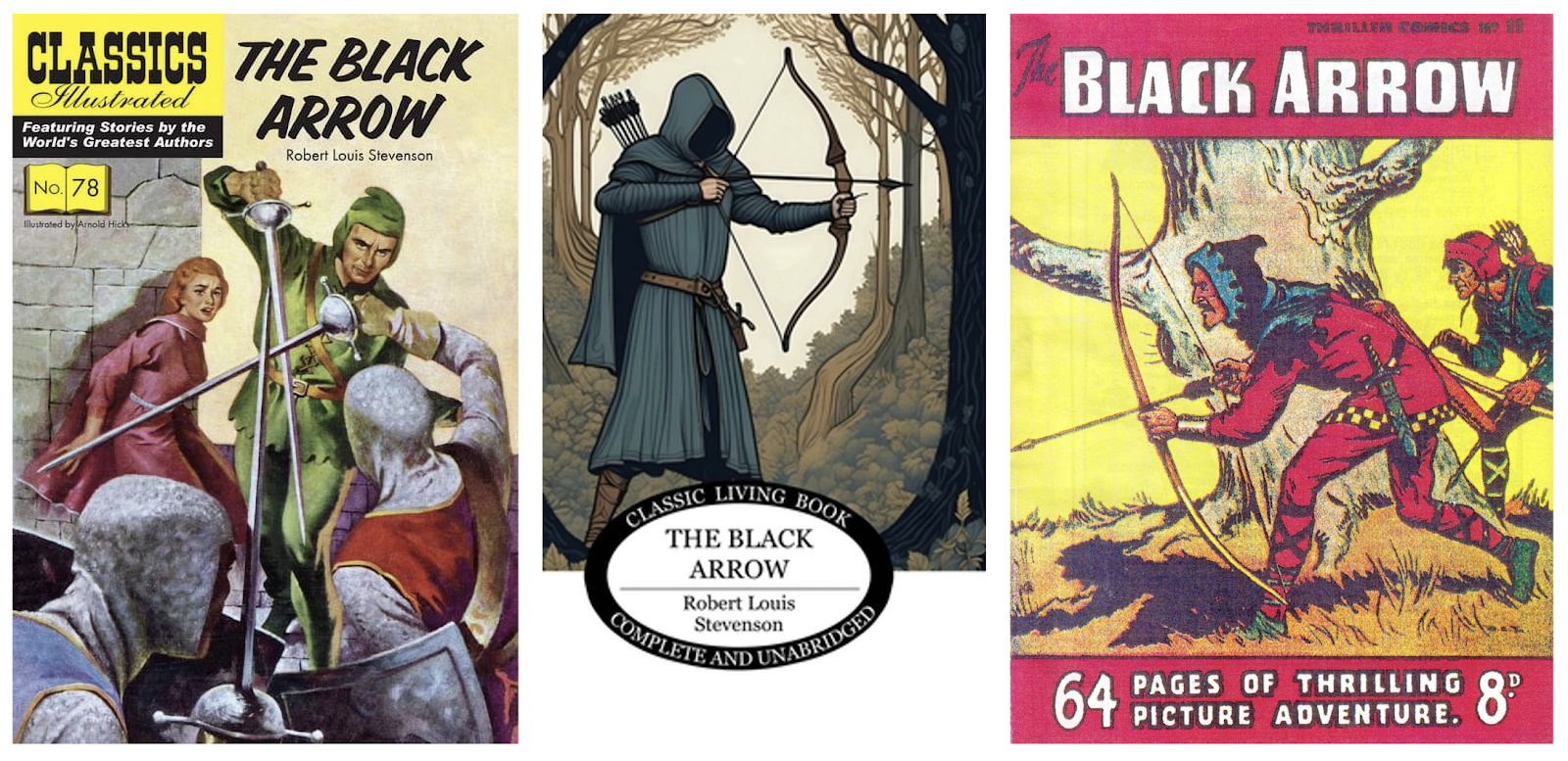
Stevenson regarded his novel as an entertainment for children, the same audience at which the similar themes of comic books would be aimed in the next century. The novel has of course been adapted to comics, notably in Classics Illustrated 31 (October 1946).
“Courageous and vigorous in the face of deteriorating health, Stevenson wrote novels, short stories… poetry, essays and a collection of letters, published in four volumes in 1912,” noted the New World Companion to English and American Literature. “Treasure Island (1883) was the first of a series of novels on which his reputation was built.”
Two of Stevenson’s stories were influential contributions to the dual identity theme in popular culture. The other was, of course, The Strange Case of Dr . Jekyll and Mr. Hyde.
About Author
