Dorian Gray
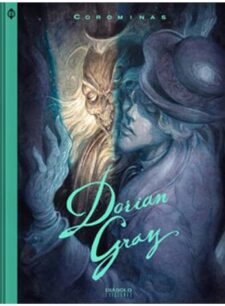 Author: Oscar Wilde
Adapted & Illustrated by: Enrique Corominas
Published by Titan Books (2026)
Graphic novels have a natural duality. The artwork is often what first captures a reader’s attention, and in Dorian Gray, Enrique Corominas has created a lusciously painted masterpiece. Many of the pages feature panels that are genuinely wall-worthy. Simply flipping through the book is enough to draw you in.
As for the story, Corominas has adapted a literary classic by Oscar Wilde, so you already know the foundation is exceptional. Rather than reinventing the tale, Corominas faithfully brings Wilde’s timeless work to life through stunning visuals that perfectly complement the novel’s Gothic atmosphere.
As Titan Books describes it, this is a story about the corruption of innocence.
“How easy it is for innocence to be corrupted. This is the crux of the story of Dorian Gray, a young handsome man from London who gets seduced by the hedonism of the upper class and the ultra-wealthy.”
When eccentric artist Basil Hallward paints the strikingly handsome Dorian Gray, both he and London’s elite become captivated by the young man’s beauty. Lord Wotton, a charismatic aristocrat, introduces Dorian to a world of excess, luxury, and indulgence—a life seemingly free of consequences.
From there, it’s a slippery slope toward moral decay and ultimately, oblivion.
Originally published in 1890, The Picture of Dorian Gray is Oscar Wilde’s only novel and remains one of the defining works of philosophical fiction and Gothic horror. A shorter novella first appeared in Lippincott’s Monthly Magazine before Wilde expanded it into the novel published in 1891.
Although Wilde wrote the story more than 135 years ago, and Corominas wisely preserves it as a period piece, its themes remain remarkably relevant. Vanity, wealth, influence, temptation, and the price of living without accountability are every bit as meaningful today as they were in Victorian England.
With its breathtaking painted artwork and enduring story, this adaptation evokes memories of the Classics Illustrated books I enjoyed growing up—albeit one intended for a much more mature audience due to its darker themes.
This is a beautiful adaptation of a timeless classic, and one that belongs on the shelf of anyone who appreciates great literature, Gothic horror, or exceptional comic art.
A fine read indeed.
About Author
Calvin Daniels is a Saskatchewan-born, self-taught journalist. He is currently Editor of Yorkton This Week, with 35-years in the newspaper business.
Dorian Gray
Dorian Gray
Adapted & Illustrated by: Enrique Corominas
Published by Titan Books (2026)
Graphic novels have a natural duality. The artwork is often what first captures a reader’s attention, and in Dorian Gray, Enrique Corominas has created a lusciously painted masterpiece. Many of the pages feature panels that are genuinely wall-worthy. Simply flipping through the book is enough to draw you in.
As for the story, Corominas has adapted a literary classic by Oscar Wilde, so you already know the foundation is exceptional. Rather than reinventing the tale, Corominas faithfully brings Wilde’s timeless work to life through stunning visuals that perfectly complement the novel’s Gothic atmosphere.
As Titan Books describes it, this is a story about the corruption of innocence.
When eccentric artist Basil Hallward paints the strikingly handsome Dorian Gray, both he and London’s elite become captivated by the young man’s beauty. Lord Wotton, a charismatic aristocrat, introduces Dorian to a world of excess, luxury, and indulgence—a life seemingly free of consequences.
From there, it’s a slippery slope toward moral decay and ultimately, oblivion.
Originally published in 1890, The Picture of Dorian Gray is Oscar Wilde’s only novel and remains one of the defining works of philosophical fiction and Gothic horror. A shorter novella first appeared in Lippincott’s Monthly Magazine before Wilde expanded it into the novel published in 1891.
Although Wilde wrote the story more than 135 years ago, and Corominas wisely preserves it as a period piece, its themes remain remarkably relevant. Vanity, wealth, influence, temptation, and the price of living without accountability are every bit as meaningful today as they were in Victorian England.
With its breathtaking painted artwork and enduring story, this adaptation evokes memories of the Classics Illustrated books I enjoyed growing up—albeit one intended for a much more mature audience due to its darker themes.
This is a beautiful adaptation of a timeless classic, and one that belongs on the shelf of anyone who appreciates great literature, Gothic horror, or exceptional comic art.
A fine read indeed.
About Author
Calvin Daniels
Calvin Daniels is a Saskatchewan-born, self-taught journalist. He is currently Editor of Yorkton This Week, with 35-years in the newspaper business.
See author's posts