
By 1969, the American counterculture was inescapable, even in popular culture.
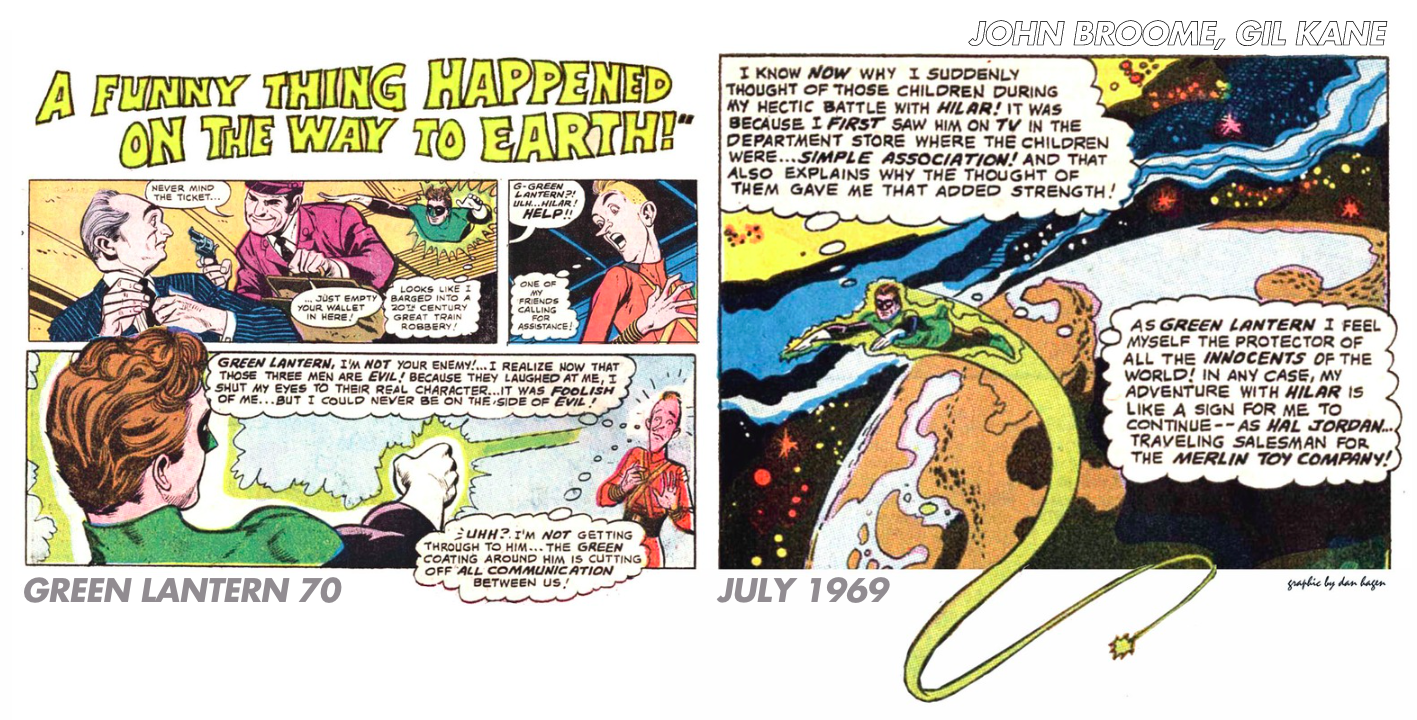
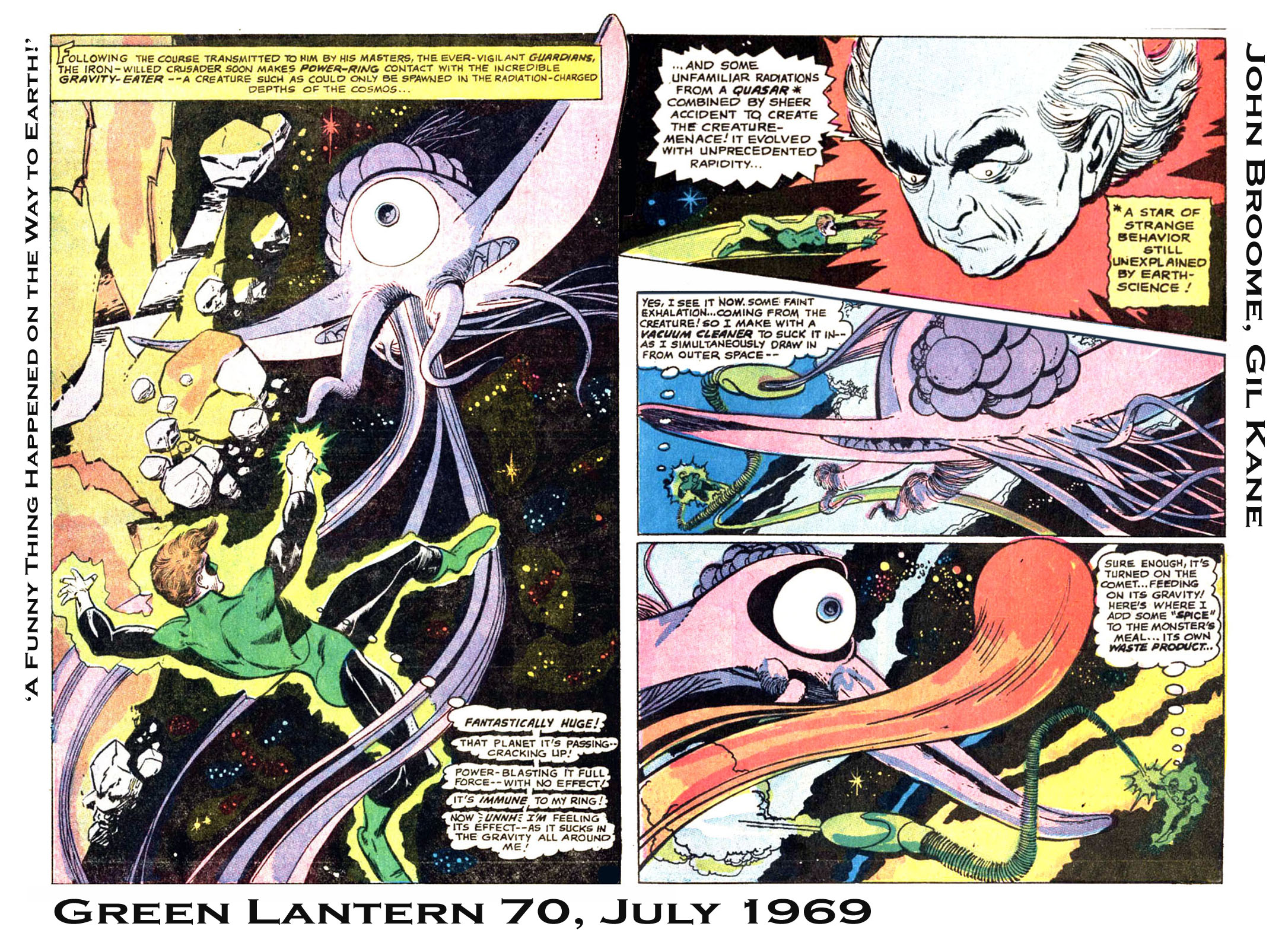
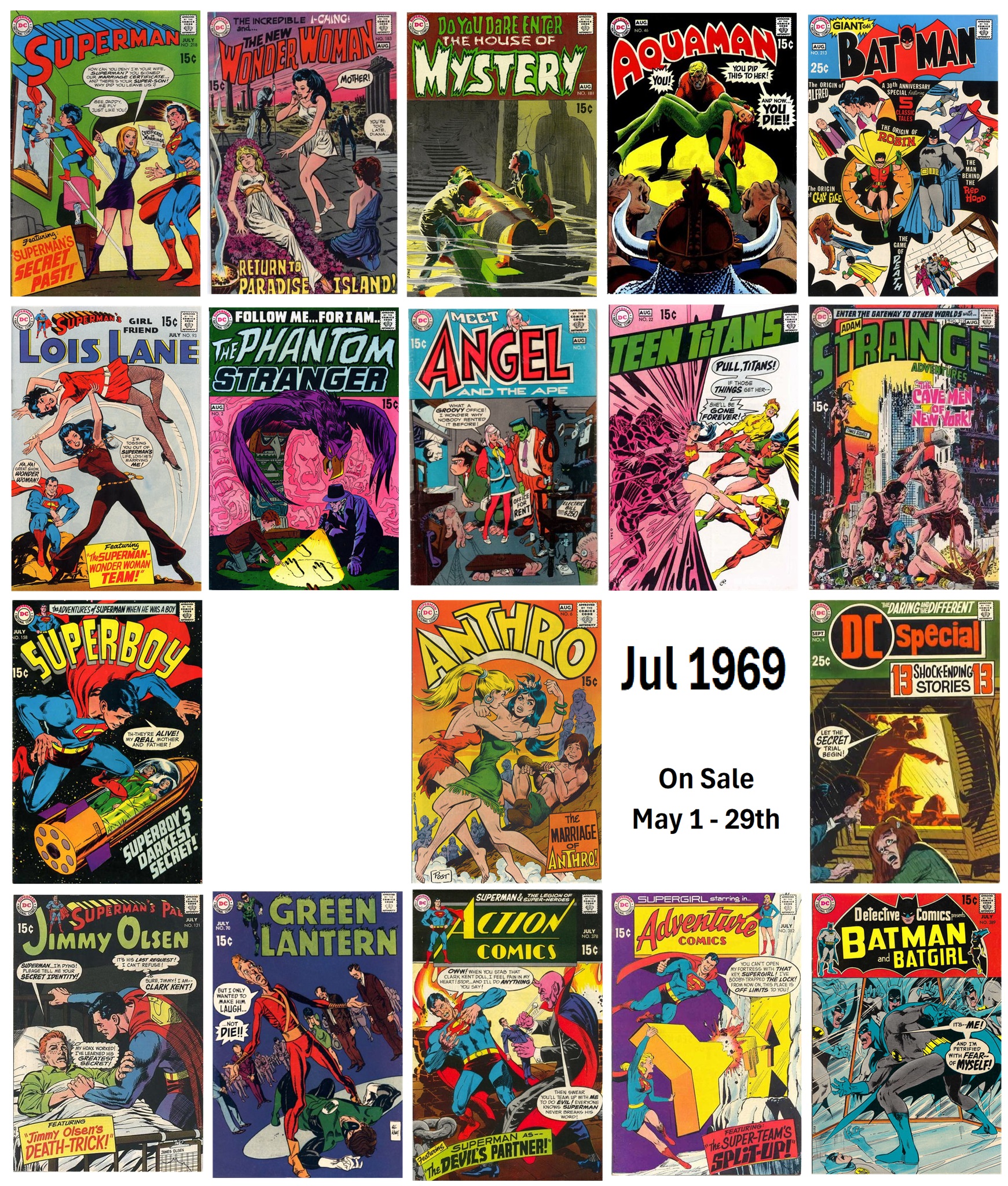
It slipped obliquely even into Green Lantern 70 (July 1969) in a story written by John Broome.
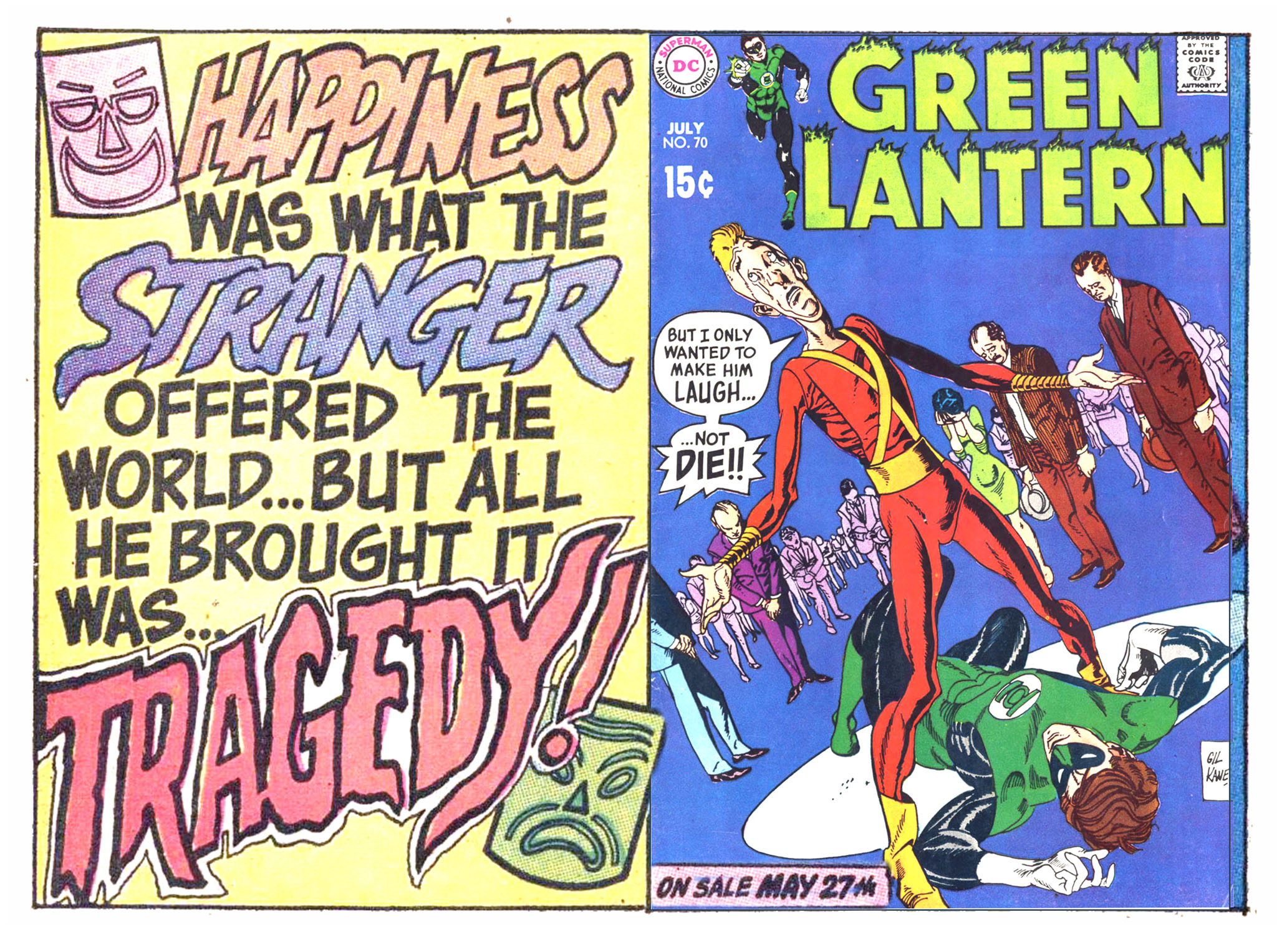
“Happiness was what the stranger offered the world … but all he brought it was … tragedy!” proclaimed the ad copy for the issue, with a cover showing a painfully thin, weeping figure astride the fallen body of Green Lantern (and wearing what appeared to be one of Captain Comet’s old discarded costumes).
In 1969, the idea of a naïve and well-meaning superhuman alien stranger had an obvious reference point: Robert Heinlein’s 1961 novel Stranger in a Strange Land, which had lately become a bestseller and something of a countercultural bible.
The novel had been based on an idea Heinlein got for his wife Ginny for turning Kipling’s Jungle Book into a “Martian Book.” What would Mowgli be like if he’d been raised by aliens?
The answer turned out to be Valentine Michael Smith, a painfully thin Martian-reared boy who gained telepathy and telekinesis from his extraterrestrial upbringing, but lost the human tendencies to be jealous and dishonest.
 “This story is supposed to be a completely free-wheeling look at contemporary human culture from the nonhuman viewpoint of the Man from Mars (in the sense of the philosophical cliché),” Heinlein said. “No sacred cows of any sort… But, in addition to a double dozen of minor satirical slants, the two major things which I am attacking are the two biggest, fattest sacred cows of all, the two that every writer is supposed to give at least lip service to: the implicit assumptions of our Western culture concerning religion and concerning sex.”
“(T)he hippies embraced Stranger in a Strange Land, which saw a spike in sales in the late sixties,” noted Alec Nevala-Lee in his book Astounding: John W. Campbell, Isaac Asimov, Robert A. Heinlein, L. Ron Hubbard and the Golden Age of Science Fiction. “It was a vindication of the risks (Heinlein) had taken, and he would never submit to the control of editors again.
The libertarian Heinlein was somewhat uncomfortable with the New Left’s cultish embrace of his novel.
“I was not giving answers,” Heinlein said. “I was trying to shake the reader loose from some preconceptions and induce him to think for himself, along new and fresh lines. In consequence, each reader gets something different out of that book because he himself supplies the answers. It is an invitation to think, not to believe.”
Green Lantern’s stranger turns out to be not a Martian but a toy. The defective and rejected robot from the planet Ghyra just wants to make people laugh, but ends up causing a lot of trouble (His name is “Hilar,” as in “hilarious”).
 Countercultural references are peppered throughout the story. Clearly, DC knew this new youth culture was out there, but didn’t know quite what to do with it.
“First the mods — then the hippies — now this!” remarks a passer-by when he spots Hilar.
A cop who tries to arrest the innocuous Hilar as a “student revolutionary” finds himself reflexively hurled aside by Hilar’s powers.
Those powers prompt a criminal gang to recruit the innocent, a mess that requires the giant green hand of the Emerald Gladiator to sort it out.
Hilar ends up as the entertainer he was meant to be, and the story’s title is finally revealed at the end — A Funny Thing Happened on the Way to Earth! (a reference to the musical comedy A Funny Thing Happened on the Way to the Forum by Stephen Sondheim, Burt Shevelove and Larry Gelbart that ran from 1962 to 1964 on Broadway and inspired a 1966 film).
Gil Kane’s run on the Green Lantern title was nearing its end, which was too bad, because his artistic ability was sleekly peaking in this era. But Kane’s new freedom from DC would enable him to do some memorable work for Marvel.
The story’s toy theme is echoed in Hal Jordan’s new job as a salesman for the Merlin Toy Company. If Broome had made it the “Aladdin Toy Company,” he’d have tied Green Lantern’s thematic origins together nicely.
“I’m glad I don’t have to go back to that insurance job,” Hal muses. “I meet enough violence and catastrophe as Green Lantern. It was too much … too depressing … to encounter them in my civilian career too as Hal Jordan, insurance claims adjuster.”
Not a thought that any of DC’s cool, self-possessed superheroes would have had a decade before.
Times, they were a-changin’.
About Author
