
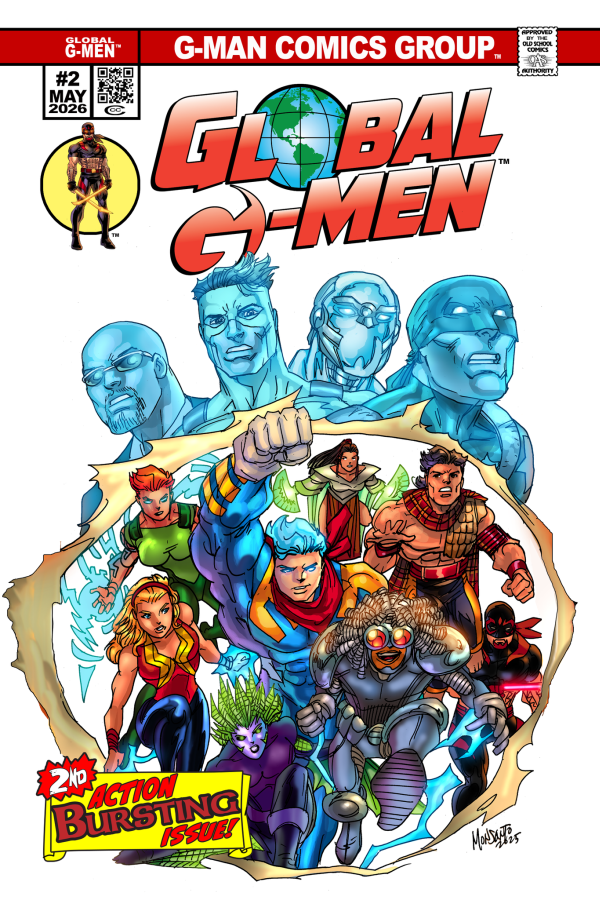
 The second issue of Global G-Men wastes no time proving that the debut was no fluke. While many new superhero-team books spend their early issues introducing characters and setting up future plots, Global G-Men #2 boldly expands its mythology while delivering a story that blends superhero action, fantasy, horror, science fiction, and international adventure into a surprisingly cohesive package.
Titled “Dark Exodus,” this issue shifts focus from traditional superheroics to a refugee crisis involving hidden supernatural communities in the Philippines. The result is a comic that feels larger than its page count, presenting readers with a world that is populated not only by heroes and villains but by entire civilizations living beneath the surface of ordinary society.
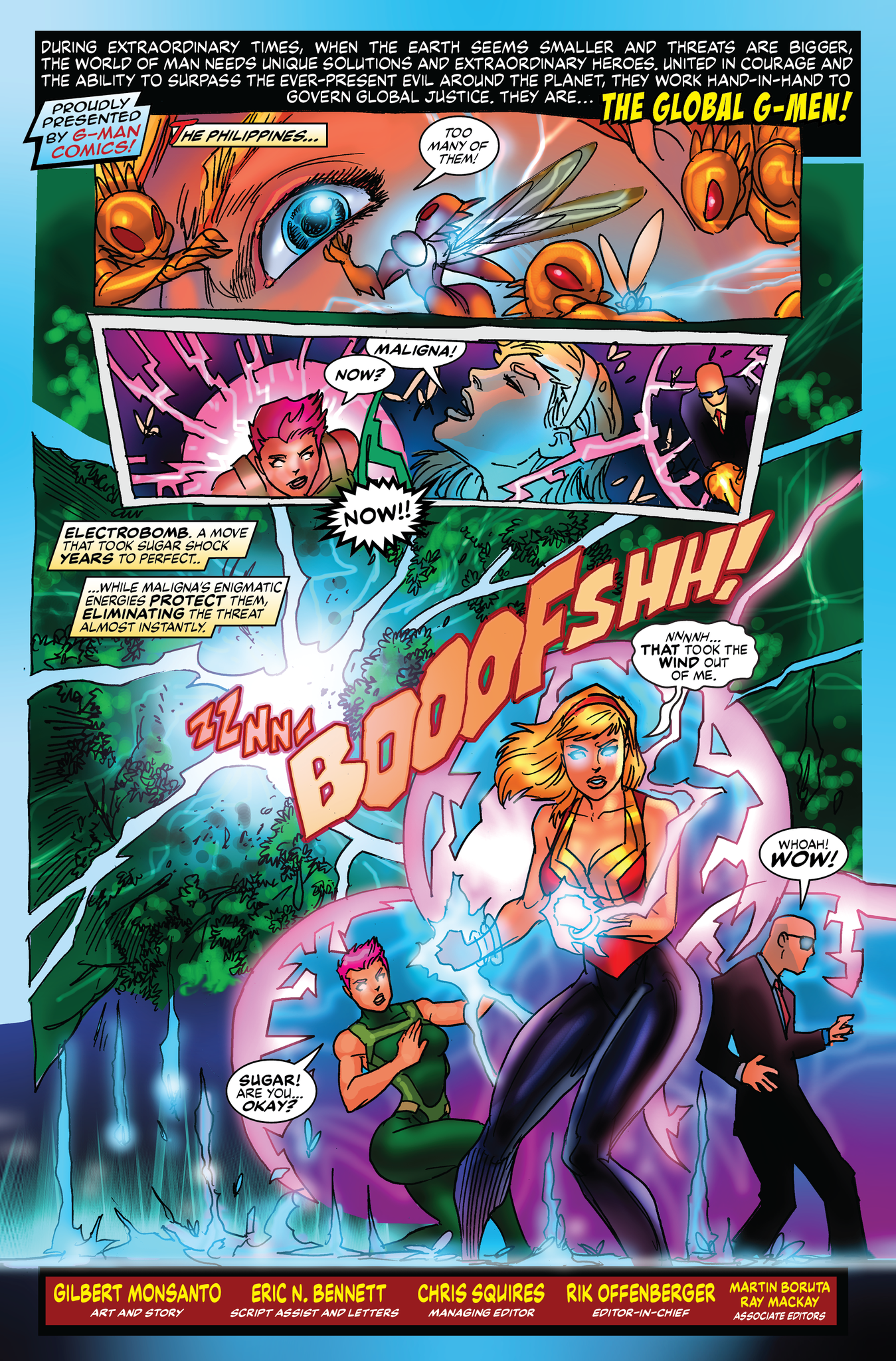 The issue opens with Agent Squires and several members of the Global G-Men investigating a disturbing situation involving displaced supernatural beings. What initially appears to be a migration quickly reveals itself to be something much darker. Entire hidden communities are abandoning their homes, and evidence suggests that many innocent lives have already been lost.
The heroes discover that the refugees belong to secret tribes of mythical creatures that have existed for centuries throughout the islands of the Philippines. These beings have remained hidden from humanity, living in isolated communities and maintaining their own cultures. Their sudden flight immediately raises questions, and the team begins investigating the source of the crisis.
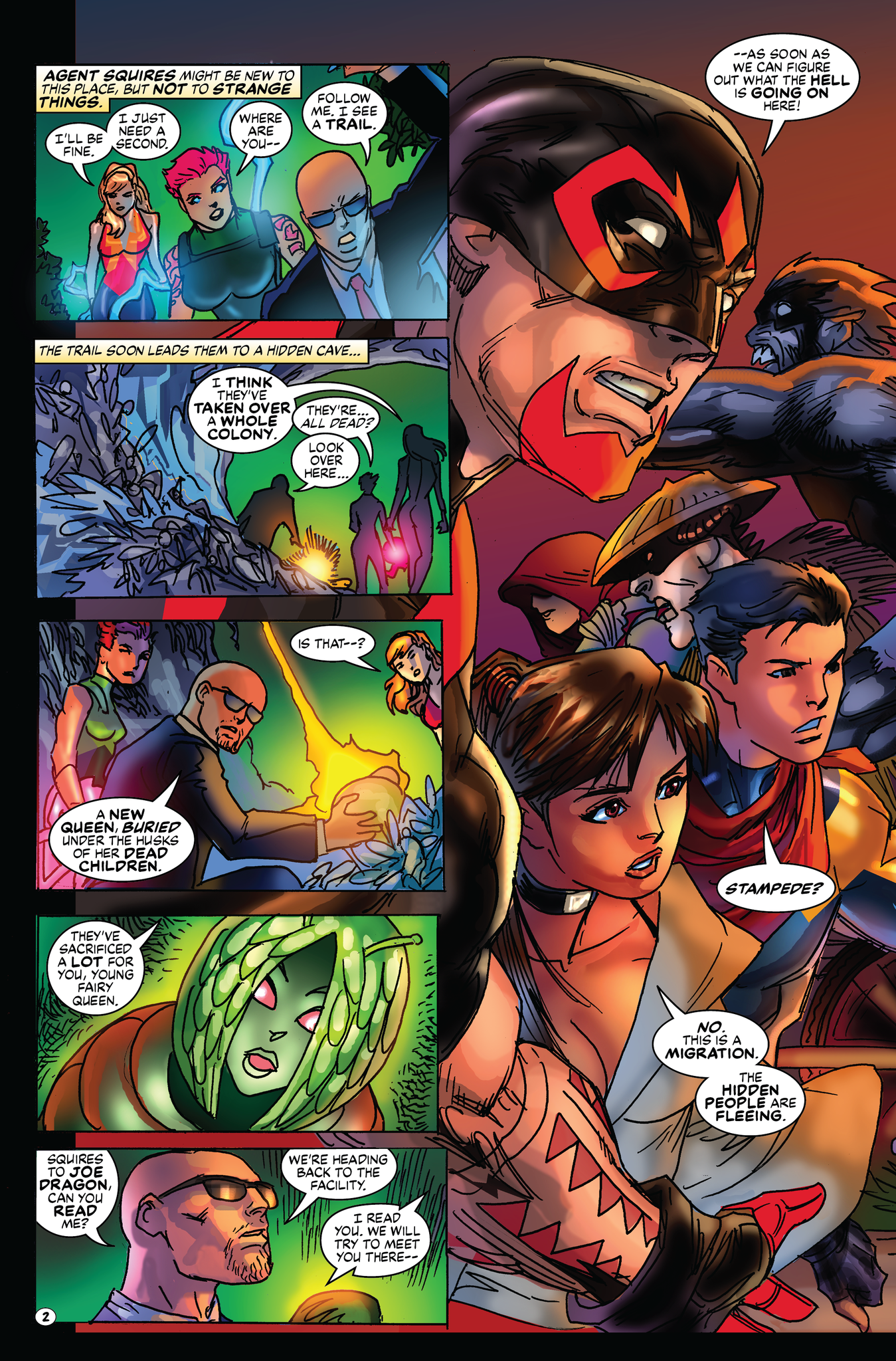 As the mystery unfolds, readers learn that the migration is being driven by an invasion of terrifying creatures known as the Malignos. These monsters are not merely attacking villages; they are taking control of supernatural beings and using them as hosts, creating stronger and more dangerous hybrid creatures. The concept gives the issue an unsettling horror element that separates it from standard superhero fare.
One of the strongest moments comes when the heroes realize that allowing the refugees to continue their journey could lead directly to genocide. Rather than simply fighting monsters, the Global G-Men are forced to make difficult moral choices about protecting innocent populations. The stakes become much larger than a single battle.
Perhaps the greatest strength of Global G-Men #2 is its ambitious world-building.
The comic introduces a fascinating mythology rooted in Filipino folklore while seamlessly integrating it into its larger superhero universe. Readers encounter a wide range of supernatural races and creatures, each visually distinct and culturally unique. Rather than feeling like generic fantasy monsters, these beings appear to have histories, traditions, and social structures of their own.
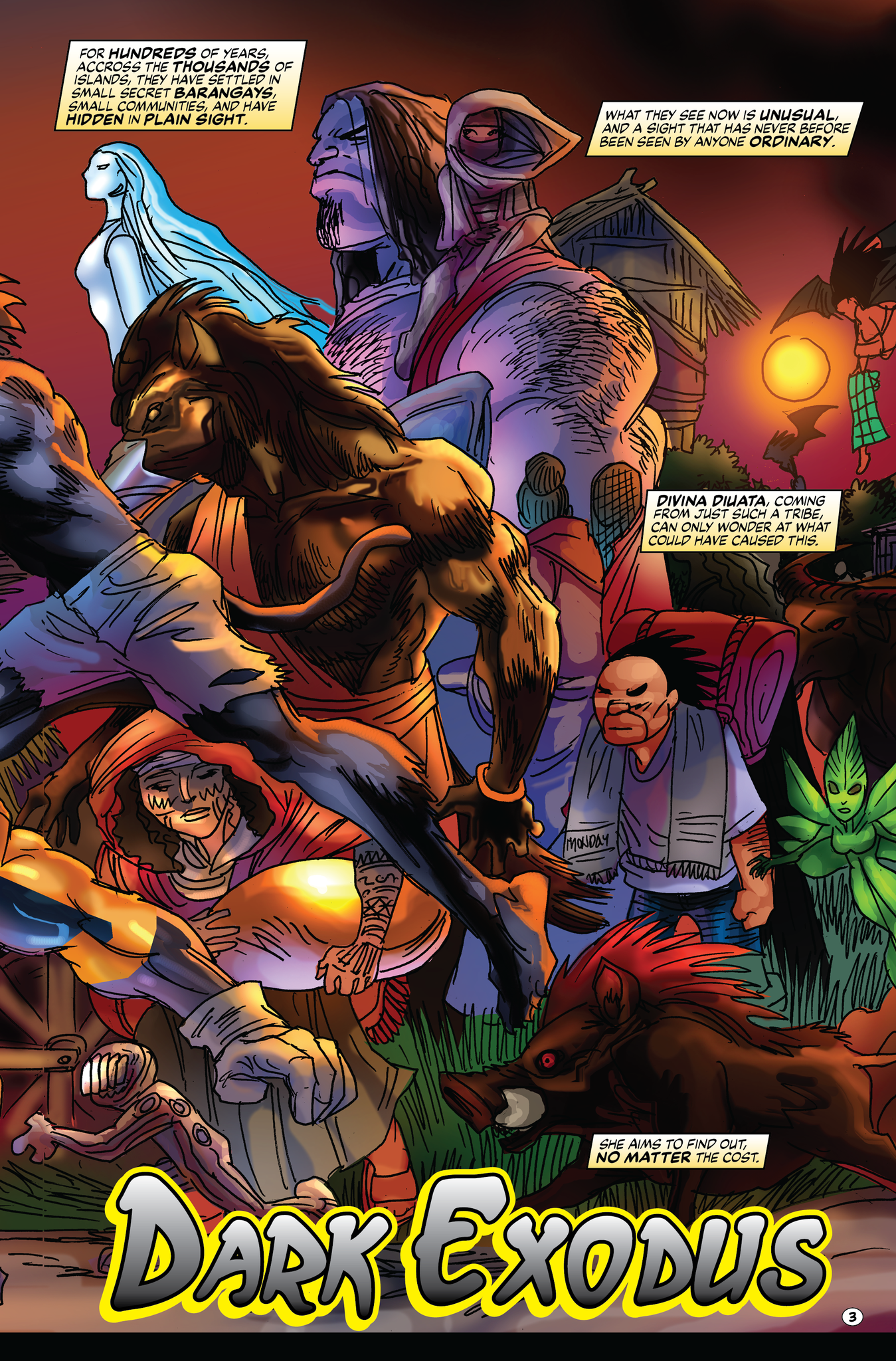 The issue’s central conflict works because it is grounded in the fear of cultural extinction. The refugees are not nameless background characters. They represent entire communities whose existence is threatened by the advancing Malignos.
This approach elevates the story beyond a simple heroes-versus-monsters conflict. The comic explores themes of displacement, survival, and responsibility without becoming preachy. The social commentary emerges naturally from the plot rather than feeling forced.
The ensemble cast receives varying amounts of attention, but several characters stand out.
Agent Squires continues to serve as an effective audience surrogate. His investigative approach allows readers to learn about this strange world alongside him. Rather than having all the answers, Squires is constantly uncovering new layers of the mystery.
The issue also gives significant attention to Divina Dihata, whose connection to the supernatural communities places her at the center of the story. Her determination to uncover the truth and protect her people provides much of the emotional core.
One of the issue’s most compelling developments involves Lyn Tek, who receives an extended flashback sequence. These pages reveal her personal history and provide insight into her identity as someone caught between humanity and monstrosity. The flashback is surprisingly poignant and offers a welcome pause from the action-heavy sections of the comic.
The standout character moment, however, may belong to Nanoman. His conversation with Lyn explores questions of identity, artificial life, and self-determination. Their discussion about whether powers or origins define a person adds philosophical depth to the issue. In a comic filled with monsters, aliens, and superheroes, these quieter moments help humanize the cast.
The Malignos make an impressive impression as antagonists.
Visually, they are frightening and memorable. Their ability to possess or merge with other beings makes them particularly dangerous because they transform allies and innocents into threats. The comic smartly avoids turning them into simple, mindless monsters.
The reveal of the alliance between the Malignos and extraterrestrial forces expands the scale of the threat considerably. By connecting supernatural horror with science-fiction concepts, the creative team creates villains that feel unique within the crowded superhero genre.
Their leader’s appearance is genuinely intimidating, and the issue effectively communicates that the heroes are facing an enemy capable of overwhelming entire civilizations.
The art team deserves enormous credit for the issue’s success.
The pages are packed with imaginative creature designs, detailed environments, and dynamic action sequences. Whether depicting hidden villages, monstrous invasions, or intimate character moments, the artwork remains consistently engaging.
The character designs are particularly strong. Each hero possesses a distinct visual identity, making it easy to follow a large ensemble cast. Likewise, the supernatural creatures display enough variety to suggest an expansive mythology without overwhelming the reader.
The colors deserve special mention. Bright superhero palettes collide with darker horror-inspired tones, creating a visual style that feels both energetic and ominous. Scenes involving fire, portals, and supernatural energy are especially striking.
There are moments when the sheer amount of information on a page can feel crowded, but the ambitious storytelling largely justifies the density.
The issue’s biggest surprise is undoubtedly the revelation that the refugee crisis is only part of a much larger conflict. The Malignos are not merely attacking isolated communities; they are part of a coordinated effort that threatens entire populations.
Equally important is Lyn Tek’s backstory, which reframes much of her character. Her struggle with identity and acceptance becomes one of the issue’s strongest emotional threads.
The conversation between Lyn and Nanoman also hints at future developments involving artificial intelligence, humanity, and personal choice. Rather than simply setting up the next fight, these scenes lay the groundwork for future character growth.
Global G-Men #2 succeeds because it refuses to play it safe. Instead of delivering a routine superhero battle, it expands the series’ mythology, introduces meaningful themes, and deepens its characters while still providing plenty of action.
The issue’s blend of folklore, science fiction, horror, and superhero adventure creates a distinctive identity that helps it stand apart from many independent team books. While some readers may need to pay close attention to keep track of the expanding cast and mythology, the reward is a rich and imaginative reading experience.
Rating: 4.5/5
Global G-Men #2 is an ambitious second issue that broadens the scope of the series considerably. With strong artwork, compelling world-building, memorable villains, and meaningful character development, “Dark Exodus” establishes that Global G-Men is building toward something much larger than a conventional
About Author
