
Beyond the surface satisfactions it supplies as an adventure story, Bram Stoker’s novel Dracula functions on several other psychological and cultural levels. That’s one reason why the novel, written in 1897, has endured for so long.
As Eric Nuzum noted on NPR, “A lot was going on when Stoker was working on Dracula at the turn of the 19th century: Victorian ideals of repressed sexuality and subservient women’s roles were going out of style; Darwinism was just taking hold; and Jack the Ripper was on a murder spree.
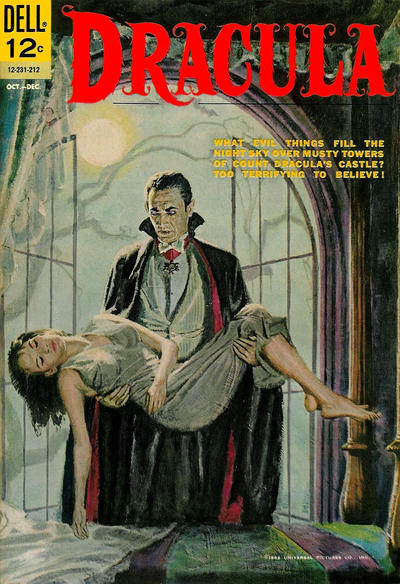 “Stoker’s villain channeled all that — and a lot more — into one super bad guy who resonated with readers for decades. Dracula gradually became the most significant work of Gothic horror literature because it was the perfect vessel for the fears and desires of the era.”
The story can be seen as a metaphor for the Victorian fascination with (and revulsion at the thought of) sexuality, for the fear of disease epidemics, for public anxiety at the idea of being seduced and invaded by the dark, European “Other,” and more.
“Dracula’s forays into London, for example, and his ability to move unnoticed through the crowded streets while carrying the potential to afflict all in his path with the stain of vampirism, play upon late Victorian fears of untrammeled immigration,” wrote Greg Buzwell in Dracula: Vampires, Perversity and Victorian Anxieties.
“The novel is desire and panic, naked power and the whisper of seduction,” noted David J. Hogan in Dracula: The First Hundred Years. “We imagine ourselves not merely Dracula’s victims but his accomplices. He is murderous and alluring in equal measure. Dracula exists at the summit of our desires and at the lowest depths of our potential for depravity.”
The story was quickly and successfully adapted to the stage and eventually inspired something like 100 films.
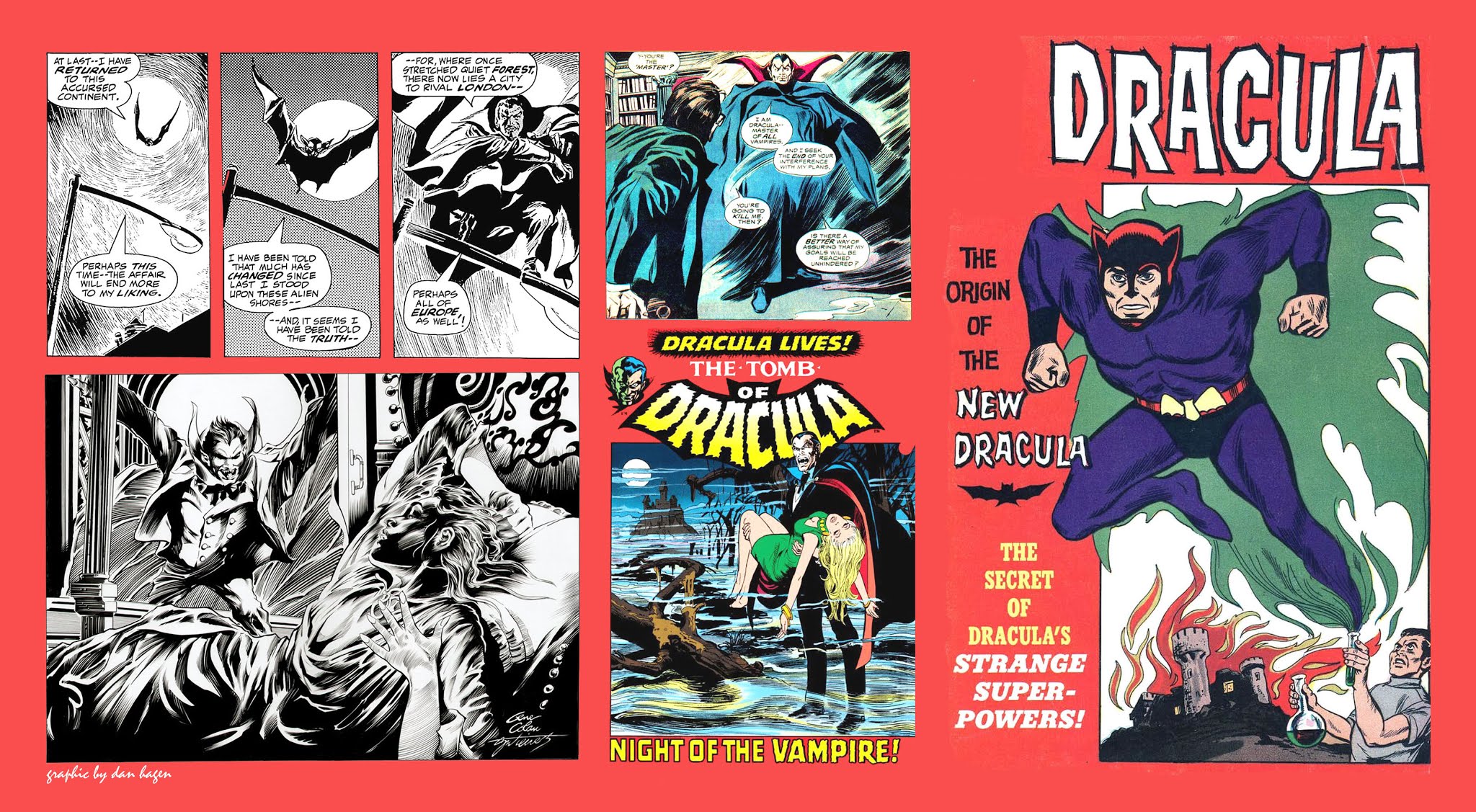
As an influence on comic book history, the popular novel served to familiarize the public with the concept of a character who possesses a vast array of superhuman powers.
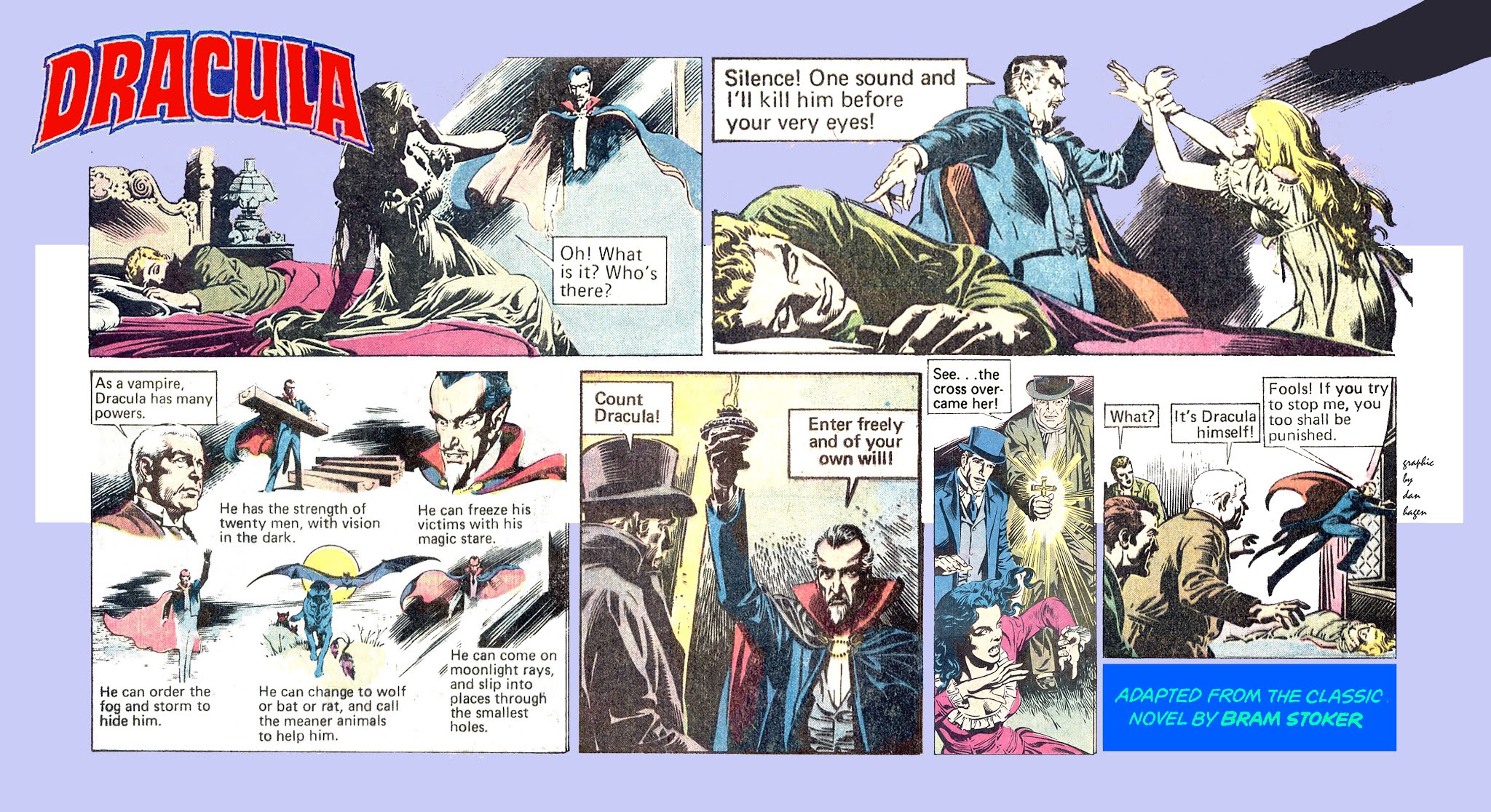
This vampire can fly, transforming himself into a bat, a wolf, or a mist. He’s strong and fast and effectively immortal, and wields telepathic power over man and beast. He can even command storms.
Now that’s a formidable foe.
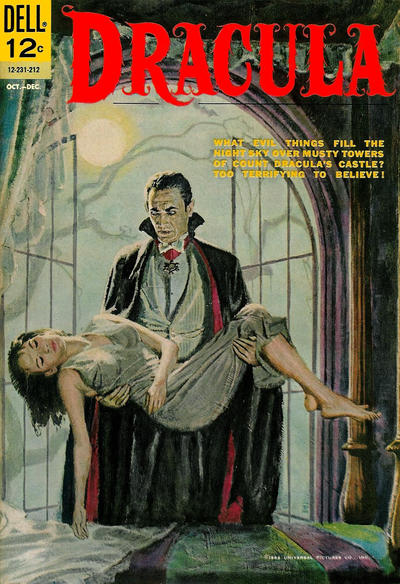
“What I saw was the Count’s head coming out from the window. I did not see the face, but I knew the man by the neck and the movement of his back and arms,” Stoker wrote. “I was at first interested and somewhat amused, for it is wonderful how small a matter will interest and amuse a man when he is a prisoner. But my very feelings changed to repulsion and terror when I saw the whole man slowly emerge from the window and begin to crawl down the castle wall over that dreadful abyss, face down with his cloak spreading out around him like great wings. At first, I could not believe my eyes.
“I thought it was some trick of the moonlight, some weird effect of shadow, but I kept looking, and it could be no delusion. I saw the fingers and toes grasp the corners of the stones, worn clear of the mortar by the stress of years, and by thus using every projection and inequality move downwards with considerable speed, just as a lizard moves along a wall.
“What manner of man is this, or what manner of creature is it in the semblance of man?”
 Buzwell noted, “The vampire has always been a contradictory figure: on the one hand a repellent blood-sucking creature crawling from the grave, and, on the other, a strangely alluring representation of nocturnal glamour and potent sexuality. The very concept of vampirism horrifies and fascinates in seemingly equal measure, and much of this perverse duality stems from the most famous vampire novel of them all.”
Beyond his necessarily predatory nature, the fact that Dracula is a monster and not a superhero is almost incidental. He had to be one or the other. We, ordinary humans, will always judge powerful beings by their utility to us, depending on whether they play on our fears or appeal to our aspirations.
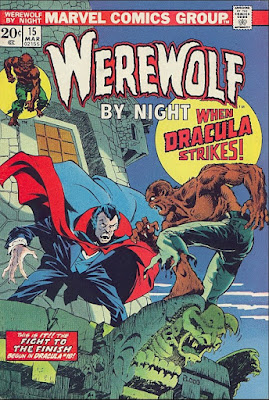
When the Comics Code relaxed its restrictions against the depiction of vampires in the early 1970s, the infamous count slipped smoothly into the Marvel Comics universe with the excellent Tomb of Dracula title. The arrogant undead nobleman ran into Spider-Man, Dr. Strange, Thor, the Avengers, the Defenders, and even Howard the Duck.
The Tomb of Dracula title also added a superhero to the Marvel universe: Blade, the Vampire Slayer, the son of a woman bitten by a vampire during childbirth, who possessed quasi-vampiric abilities.
Author Fred Saberhagen was able to transform Dracula into a misunderstood quasi-superhero in a series of 10 entertaining novels beginning with The Dracula Tape (1980) and continuing with The Holmes-Dracula File (1978), Seance for a Vampire (1994), and A Coldness in the Blood (2002).
In the book Dracula and Philosophy: Dying to Know, Ivan Wolfe notes that Saberhagen’s Dracula “…tends to feed off of animals (mostly rats) and only engages in consensual biting with humans … Dracula has extraordinarily bad luck in dealing with humans, and they tend to react with horror rather than attempt to understand those who seem different.”
Dell Comics even turned one of Dracula’s (badly drawn) human descendants into an out-and-out superhero during the superhero craze of 1966.
A “batman” indeed.
About Author
