
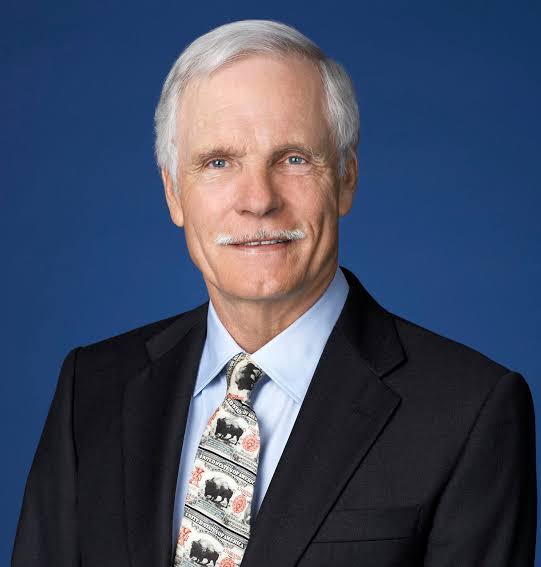
 Robert Edward “Ted” Turner, the bold media pioneer who reshaped television and gave professional wrestling one of its most influential platforms, has passed away at the age of 88. While his legacy spans news, sports, and environmental advocacy, to wrestling fans Turner will forever be remembered as the driving force behind World Championship Wrestling (WCW) and its meteoric rise in the 1990s.
Born on November 19, 1938, in Cincinnati, Ohio, Turner built a broadcasting empire from a single struggling UHF station in Atlanta. That station evolved into the “Superstation” WTBS, eventually becoming Turner Broadcasting System, which helped redefine cable television. Networks like TNT and TBS became household names under his leadership—but for millions of wrestling fans, Turner’s greatest gamble was in professional wrestling.
In 1988, Turner purchased Jim Crockett Promotions and transformed it into WCW, ensuring that wrestling would have a powerful national stage to rival World Wrestling Federation. Unlike many corporate owners, Turner didn’t just see wrestling as programming—he saw it as a cornerstone of his networks. Famously declaring, “I’m in the rasslin’ business,” Turner committed resources, prime time slots, and unwavering support to the industry.
That commitment culminated in the launch of WCW Monday Nitro in 1995, igniting the legendary Monday Night Wars. WCW, under Turner’s umbrella, became a cultural phenomenon. With stars like Hulk Hogan, Sting, Ric Flair, and the rebellious New World Order (nWo), WCW dominated ratings for 83 consecutive weeks—an achievement that reshaped the wrestling business.
Turner’s influence extended beyond ratings. He elevated wrestling production values, legitimized it within mainstream media, and provided creative freedom that allowed larger-than-life storytelling to flourish. For a time, WCW wasn’t just competition—it was the industry leader.
However, corporate changes following the merger of Turner Broadcasting with Time Warner gradually distanced Turner from the company he built. Without his steadfast support, WCW declined and was ultimately sold in 2001, marking the end of an era. Many within the wrestling world have long speculated that without Turner’s removal, WCW’s fate may have been very different.
Beyond wrestling, Turner’s accomplishments were vast. He founded CNN, the world’s first 24-hour news channel, revolutionizing global journalism. He was a philanthropist, environmentalist, and sports team owner, including the Atlanta Braves and Atlanta Hawks. Yet even among these achievements, his role in wrestling remains one of his most passionate and personal ventures.
Ted Turner is survived by his children and a legacy that stretches across industries. To wrestling fans, he was more than a businessman—he was a believer. At a time when others dismissed professional wrestling, Turner gave it a stage, a spotlight, and a fight.
And for that, WCW—and its fans—will never forget him.
About Author
