A regular follower of these review efforts will know two things about Trevor and me as members of our little “Meeple Guild.”
To start, we like abstract strategy games, perhaps because, as we turn greyer by the year, we know playing such games is good for brain function. They make you think.
And, as fans of abstract strategy games, we hold a high degree of respect for game designer Dieter Stein.
As noted in previous reviews, Stein has created some of the best games in the genre this millennium, with titles such as Ordo, Urbino, and Fendo immediately coming to mind. You can also check out his excellent website at spielstein.com.
To that list, add Volo.
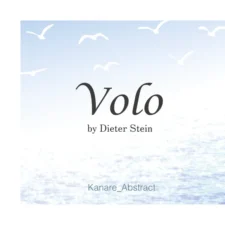 This is not a new game. It was created in 2010, but it now has a new edition thanks to Kanare_Abstract.
Volo has seen a couple of editions over the years, moving in and out of small-run production, as abstract strategy games often do. These games tend to be something of an acquired taste, and the audience is therefore limited.
Apparently, Volo was inspired by the beauty of birds flying in flocks, which is a neat concept to consider in terms of design inspiration.
What Volo ultimately offers is a blend of placement, movement, connection, and territory elements, a hybrid of mechanics and ideas.
The game is typically played on a hexagonal board with 120 spaces.
Each player, in turn, either places a piece or moves one or more pieces, referred to as “birds,” to connect them into a single contiguous flock.
In the Kanare_Abstract edition, the board is cloth, and the pieces are wooden, in blue and yellow, making for a visually striking presentation despite its relatively small footprint. It all packs neatly into a compact, easy-to-carry box.
Birds may not be placed directly adjacent to other friendly birds and may only move, or “fly,” toward other birds if doing so expands an existing friendly flock once they land.
In addition, a flock cannot be split once it has been formed. This forces players to introduce new birds into play, which is where much of the competition develops.
If an opponent’s birds become isolated and are blocked from connecting with another flock of their colour, they are removed from the board. However, this is not always beneficial, as a player who ends up with one contiguous flock, regardless of size, wins the game.
There is a great deal to consider in terms of strategy.
Players must place pieces in positions that allow for easy connection with other flocks, while also working to slow an opponent’s progress, sometimes at the cost of their own momentum.
Balance is key, as players attempt to control space and manage multiple flocks at once.
Among the many fine games Stein has created, this one ranks easily in his top three in this writer’s opinion, and it is a must-have for fans of abstract strategy games.
Well worth seeking out at kanare-abstract.com.
About Author
Calvin Daniels is a Saskatchewan-born, self-taught journalist. He is currently Editor of Yorkton This Week, with 35-years in the newspaper business.

One of a top designer’s top games
A regular follower of these review efforts will know two things about Trevor and me as members of our little “Meeple Guild.”
To start, we like abstract strategy games, perhaps because, as we turn greyer by the year, we know playing such games is good for brain function. They make you think.
And, as fans of abstract strategy games, we hold a high degree of respect for game designer Dieter Stein.
As noted in previous reviews, Stein has created some of the best games in the genre this millennium, with titles such as Ordo, Urbino, and Fendo immediately coming to mind. You can also check out his excellent website at spielstein.com.
To that list, add Volo.
Volo has seen a couple of editions over the years, moving in and out of small-run production, as abstract strategy games often do. These games tend to be something of an acquired taste, and the audience is therefore limited.
Apparently, Volo was inspired by the beauty of birds flying in flocks, which is a neat concept to consider in terms of design inspiration.
What Volo ultimately offers is a blend of placement, movement, connection, and territory elements, a hybrid of mechanics and ideas.
The game is typically played on a hexagonal board with 120 spaces.
Each player, in turn, either places a piece or moves one or more pieces, referred to as “birds,” to connect them into a single contiguous flock.
In the Kanare_Abstract edition, the board is cloth, and the pieces are wooden, in blue and yellow, making for a visually striking presentation despite its relatively small footprint. It all packs neatly into a compact, easy-to-carry box.
Birds may not be placed directly adjacent to other friendly birds and may only move, or “fly,” toward other birds if doing so expands an existing friendly flock once they land.
In addition, a flock cannot be split once it has been formed. This forces players to introduce new birds into play, which is where much of the competition develops.
If an opponent’s birds become isolated and are blocked from connecting with another flock of their colour, they are removed from the board. However, this is not always beneficial, as a player who ends up with one contiguous flock, regardless of size, wins the game.
There is a great deal to consider in terms of strategy.
Players must place pieces in positions that allow for easy connection with other flocks, while also working to slow an opponent’s progress, sometimes at the cost of their own momentum.
Balance is key, as players attempt to control space and manage multiple flocks at once.
Among the many fine games Stein has created, this one ranks easily in his top three in this writer’s opinion, and it is a must-have for fans of abstract strategy games.
Well worth seeking out at kanare-abstract.com.
About Author
Calvin Daniels
Calvin Daniels is a Saskatchewan-born, self-taught journalist. He is currently Editor of Yorkton This Week, with 35-years in the newspaper business.
See author's posts