

He threw all his strength into his legs, felt them hammering the water behind him. In moments he was moving with great speed. They saw the form rushing through the water. Instinctively the men before him started moving to the side. Spearguns are for men, not whatever this was, moving at this speed.
— Martin Caiden, Cyborg
America’s love of gadgetry would naturally culminate in one event: the man who becomes a gadget.
“From their primary purpose as an extension of man’s limited muscular and intellectual capability, machines have become in our society symbols of power and virility, often assuming sexual symbolism in the minds of men,” wrote Thomas N. Scortia and George Zebrowski in their essay The Cyborg in Science Fiction. “Who can doubt the sexual nature of the motorcycle between the cyclist’s legs, man or woman.”
 “In the quest for a condition transcending humanity, it was natural that people should conceive the idea of becoming part of their machines. It was inevitable in the latter half of the 20th century — with its pacemakers, artificial heart valves and mechanical sense expanders — that the concept of the cyborg be born.”
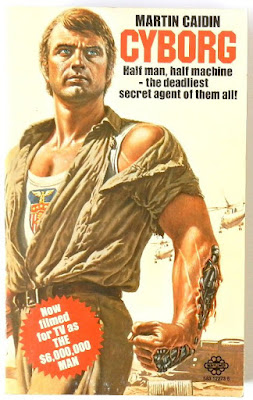
In 1972, only a dozen years after the term “cyborg” was coined, Martin Caiden wrote a novel by that name that combined science fiction with secret agent shenanigans.
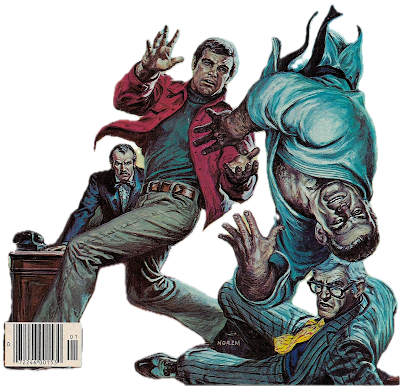
Like Superman, Batman, Spider-Man, Iron Man and many others, Col. Steve Austin required a horrific tragedy to aesthetically balance his superhuman status. So Caiden gave us a detailed account of how the mangled form of the astronaut, torn apart in an air crash, became a literal superspy. Caiden followed up with three sequels: Operation Nuke (1973), High Crystal (1974) and Cyborg IV (1975).
In the novel, Col. Austin ends up with tireless legs, a poison dart gun/battering ram for an arm and a sightless camera for an eye. A swiftly produced TV movie about the character upped the ante in the direction of Superman.
 And just as Superman was born from the social and economic anxieties of the Great Depression, the Six Million Dollar Man reflected a dominant force in postwar America: the technological focus of the military-industrial complex.
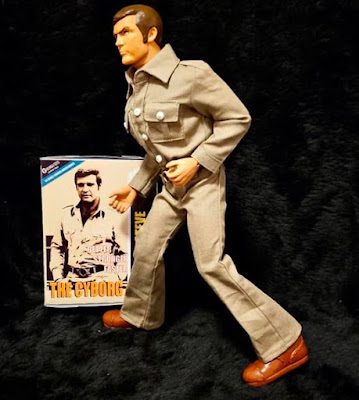
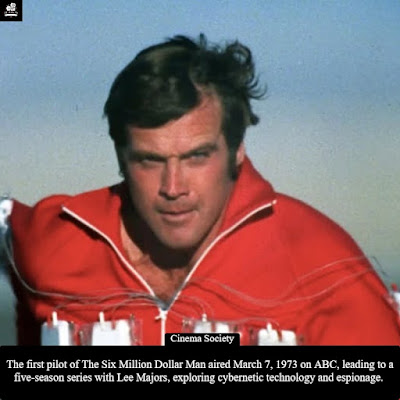
From 1973 to 1978, stoical Detroit-born actor Lee Majors appeared as the bionic man in three TV movies, a television series and a spin-off series.
“The super-powered TV series turned out to be a great deal of fun, if not a terribly intellectual venture,” observed John Kenneth Muir in his Encyclopedia of Superheroes on Film and Television.
“Since special effects were still rudimentary at the time of the series (the pre-Star Wars era), slow-motion photography was utilized extensively during the action sequences on The Six Million Dollar Man. So when Steve was supposed to run at incredible speeds, he would actually be seen running very, very slowly, accompanied by the distinctive ‘ch-ch-ch-ch-ch-ch’ sound effects that became a trademark of the bionic shows. This unique solution to visually dramatizing super speed resulted in a generation of children running in slow motion on playgrounds to emulate their hero.”
The show began with espionage plots, but soon found a more audacious direction. “(P)erhaps a year into The Six Million Dollar Man’s run on ABC primetime, there was a shift in format to the more overtly fantastic (and romantic),” Muir noted. “The ratings soared.”
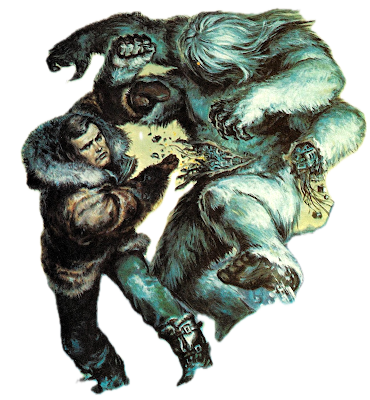
 Humanoid robots, a rampaging Venus probe, an alien Bigfoot, another super-powered astronaut (played by William Shatner) and a Seven Million Dollar Man (played by Monte Markham) were among the menaces that threatened the stalwart Austin.
“The Six Million Dollar Man truly found its identity when Austin faced off against super-powered fantasy figures,” Muir wrote. “As a spy, Steve was just so-so, but as a superhero he kicked ass.”
Like The Man from UNCLE a decade earlier, The Six Million Dollar Man inspired a distaff spin-off — The Bionic Woman (the producers thought it would be vulgar to put a price tag on a woman).
Where Superman had Supergirl, Superboy and Krypto the Super Dog, Steve Austin had the Bionic Woman Jaime Sommers (played by the talented Lindsay Wagner), the Bionic Boy (played by Vincent Van Patten) and Max the Bionic Dog (played by a German shepherd).
“Basically an update of Superman, it is very much on a comic book level,” pronounced John Brosnan in Future Tense: The Cinema of Science Fiction.
Created by Kenneth Johnson, who went on to helm The Incredible Hulk, the series proved popular at home and worldwide, although it was retitled The Man Worth Millions in Israel because “six million” stirred memories of the Holocaust.
To provide the show some credibility, Johnson limited the protagonists’ bionic powers.
 “When you’re dealing with the area of fantasy, if you say, ‘Well, they’re bionic so they can do whatever they want,’ then it gets out of hand, so you’ve got to have really, really tight rules,” Johnson said. “[Steve and Jaime] can jump up two stories but not three. They can jump down three stories but not four.”
Caiden, who’d unsuccessfully recommended that the producers continually update Austin’s technology, actually once suggested that they kill off Majors’ character because of the tabloid prominence of the actor’s marriage to Farrah Fawcett.
“Lee Majors’ personal life was getting so public, it had a deleterious effect on the audience,” Caiden said. “I told the producers to kill him off and bring in Monte Markham, who’d been our first choice for the part.”
Nevertheless, Majors finished out the well-beloved series, appearing in three TV movie revivals: The Return of the Six Million Dollar Man and the Bionic Woman (1987), Bionic Showdown: The Six Million Dollar Man and the Bionic Woman (1989); and Bionic Ever After? (1994).
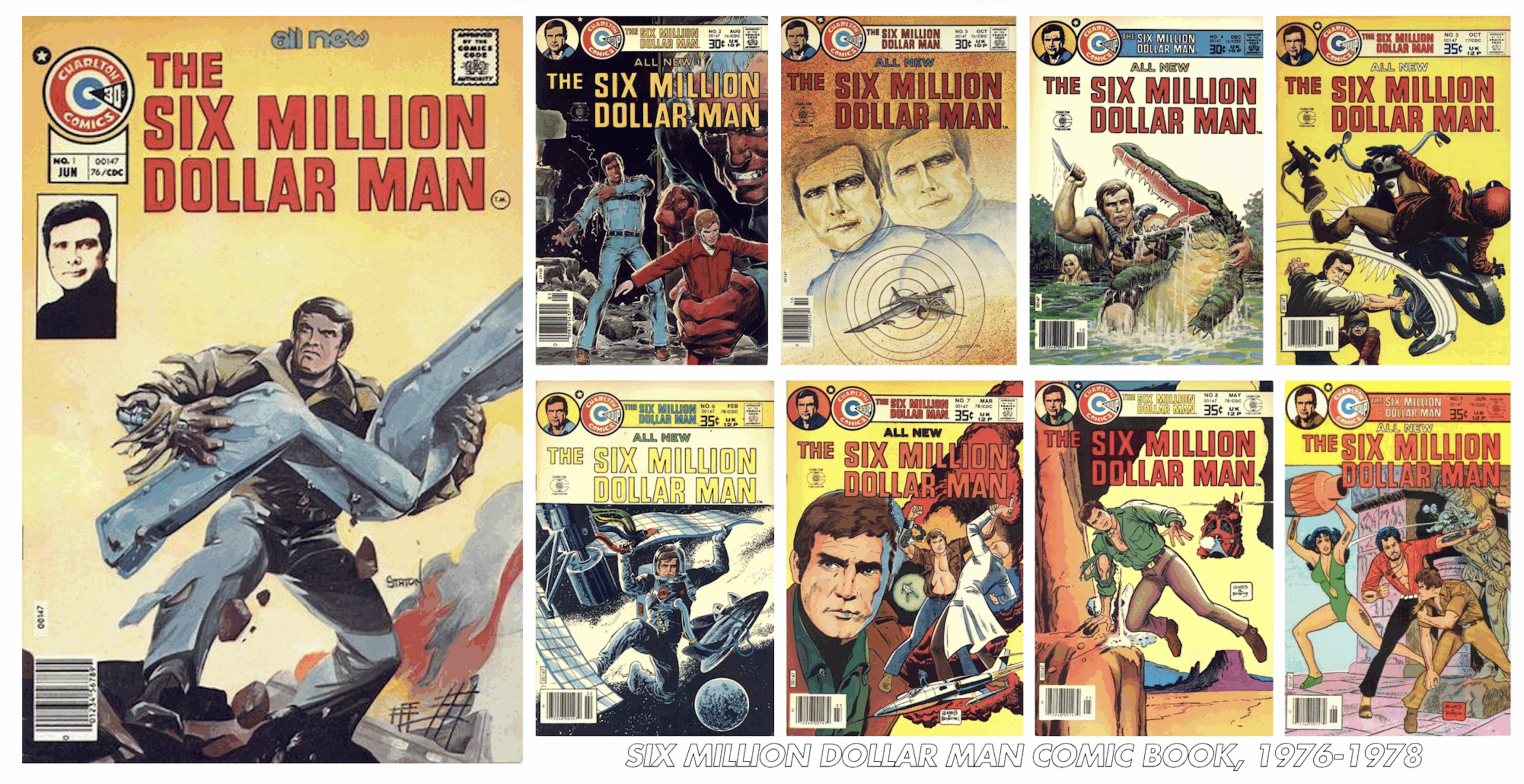
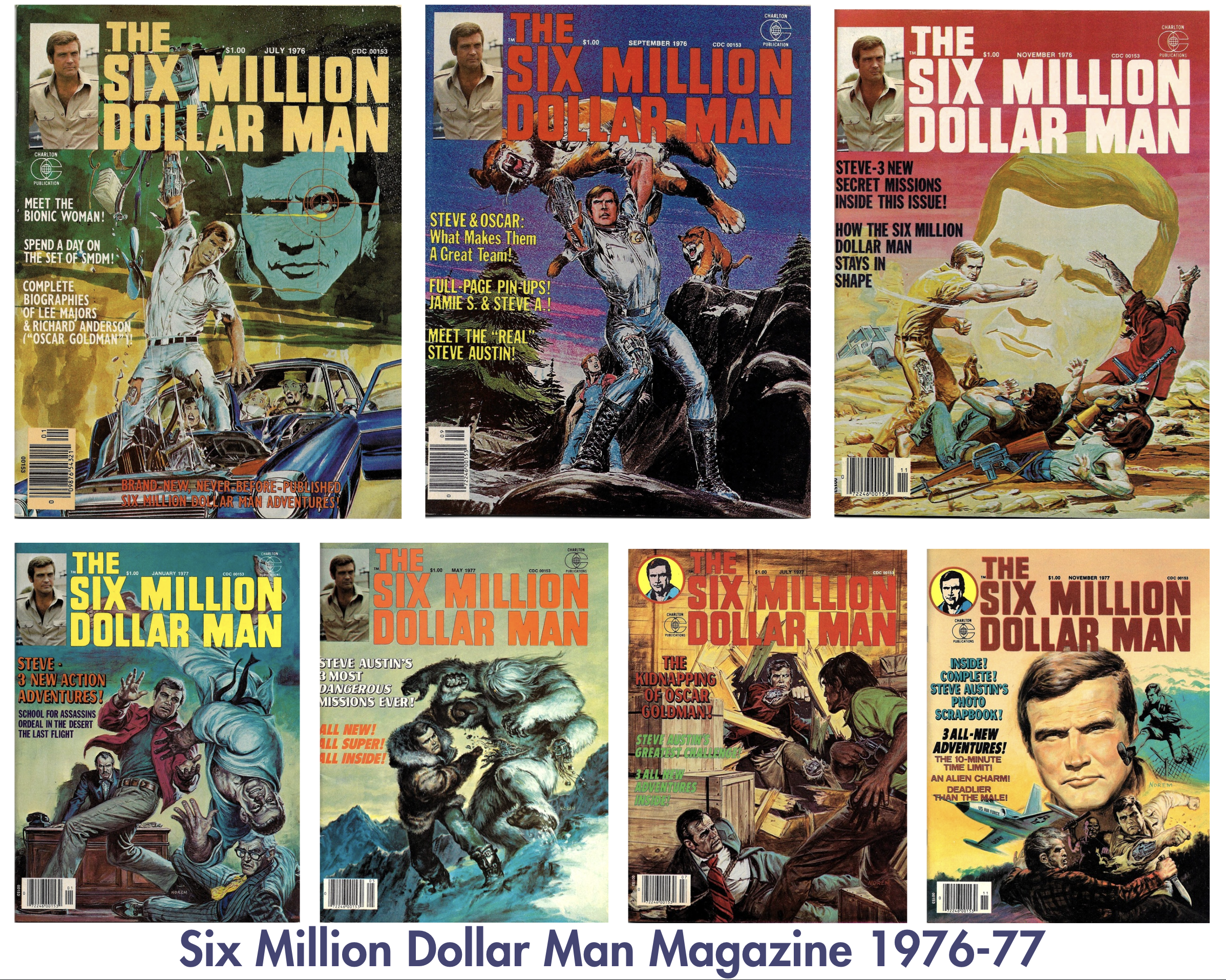
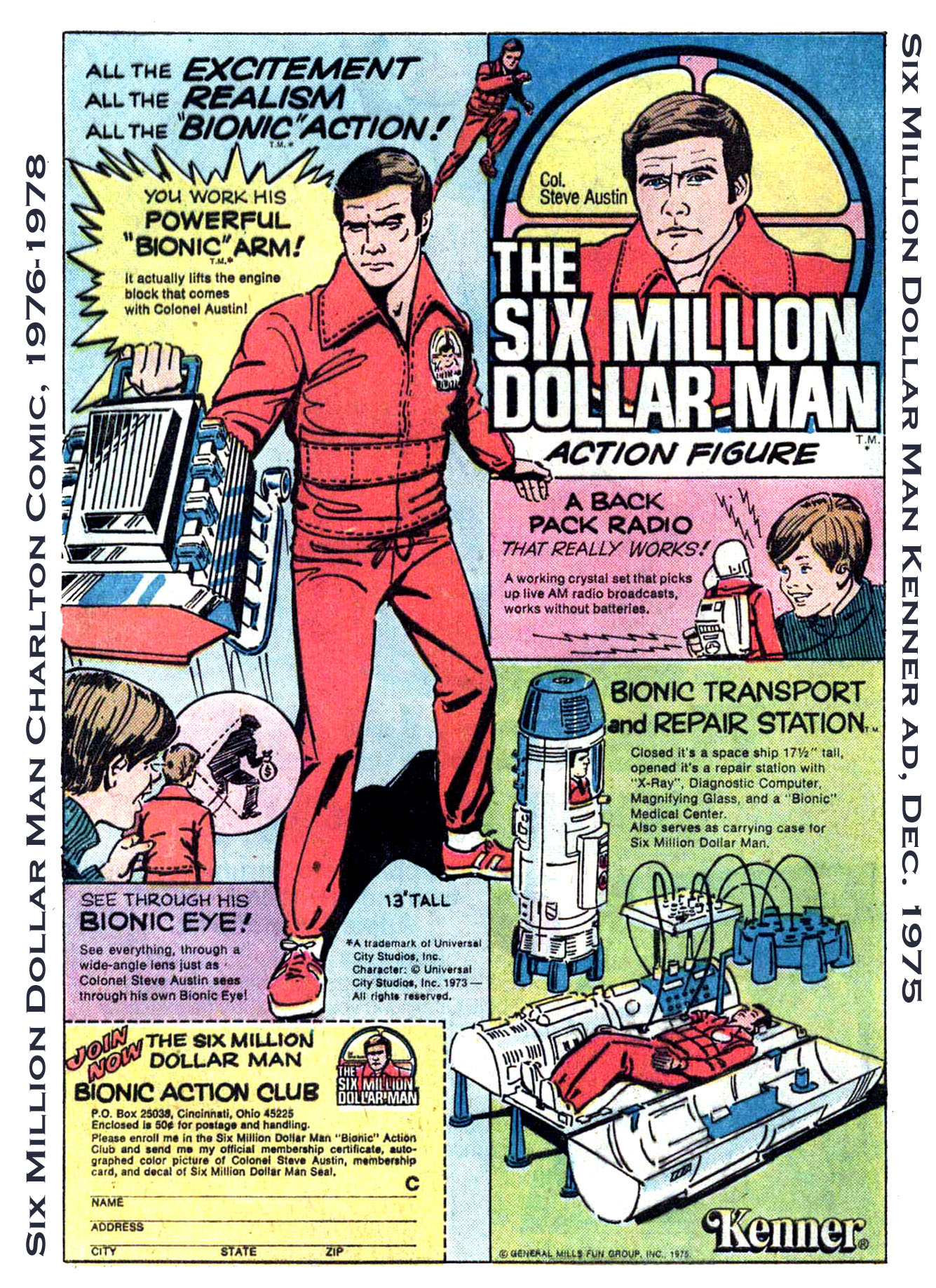
In addition to Caiden’s novels, six paperback novelizations were published about the series, and Charlton Comics featured the character in both a nine-issue comic book series and a seven-issue black-and-white magazine.
 In the 21st century, Dynamite Comics has offered a couple of reboots of the character — now called The Bionic Man — as well as his female counterpart.
A new and much darker TV version of The Bionic Woman came and went in 2007.
Various movie adaptations of The Six Million Dollar Man have been planned over the decades, one of which was supposed to star Mark Wahlberg.
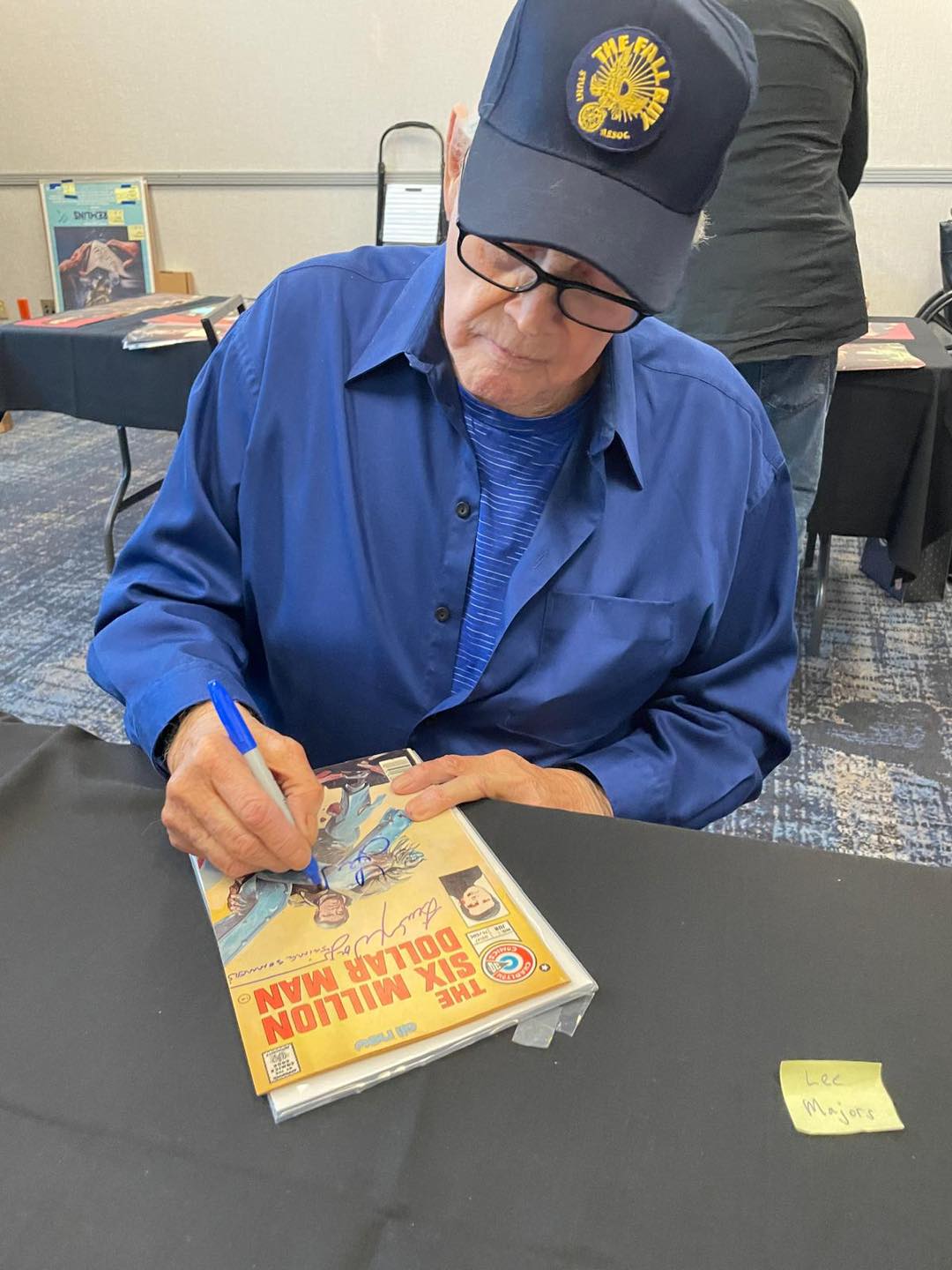
“Naturally, it’s going to be The Six Billion Dollar Man,” Majors quipped. “They kind of left me in the wake there.”
About Author
